Quick Summary
Both snake plants and ZZ plants are nearly unkillable, low-light tolerant, and drought-resistant. Snake plants are tall and architectural; ZZ plants are bushy and glossy. Snake plants are more drought-tolerant and cold-hardy. ZZ plants handle darker rooms better. Both are toxic to pets if chewed, so keep them out of reach. Choose based on your space, style, and specific conditions — or get both.
The snake plant vs ZZ plant debate comes up constantly because both are marketed as "unkillable" beginner plants. And honestly, both live up to the hype. But they have distinct looks, growth habits, and minor care differences that might make one a better fit for your space. This guide compares them across every dimension so you can make an informed choice — or decide to get both.
Complete Side-by-Side Comparison
| Feature | Snake Plant | ZZ Plant |
|---|---|---|
| Scientific name | Dracaena trifasciata (formerly Sansevieria) | Zamioculcas zamiifolia |
| Common names | Mother-in-law's tongue, Sansevieria | ZZ plant, Zanzibar gem, Eternity plant |
| Origin | West Africa (Nigeria, Congo) | Eastern Africa (Kenya, Tanzania) |
| Growth habit | Tall, upright, sword-like leaves from soil | Arching stems with paired glossy leaflets |
| Height | 2-4 feet (some varieties reach 5+) | 2-3 feet (compact, rarely exceeds 3 feet) |
| Width | 1-2 feet (clumping) | 2-3 feet (arching stems spread wider) |
| Light needs | Low to bright indirect | Low to bright indirect |
| Lowest light tolerance | Good | Better — survives in very dim conditions |
| Watering frequency | Every 2-6 weeks | Every 2-4 weeks |
| Drought tolerance | Excellent (stores water in thick leaves) | Excellent (stores water in rhizomes) |
| Growth speed | Slow (2-4 new leaves per year) | Very slow (1-2 new stems per year) |
| Pet-safe? | Mildly toxic if ingested | Mildly toxic if ingested |
| Air purifying | Negligible at room scale (like all houseplants) | Negligible at room scale (like all houseplants) |
| Propagation ease | Easy (division, leaf cuttings) | Slow (division preferred, leaf cuttings take months) |
| Soil preference | Well-draining cactus/succulent mix | Well-draining standard potting mix |
| Humidity needs | Low — tolerates dry air | Low — tolerates dry air |
| Temperature range | 50-85°F | 60-85°F |
Appearance and Style
Snake Plant
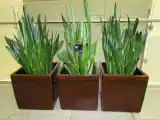
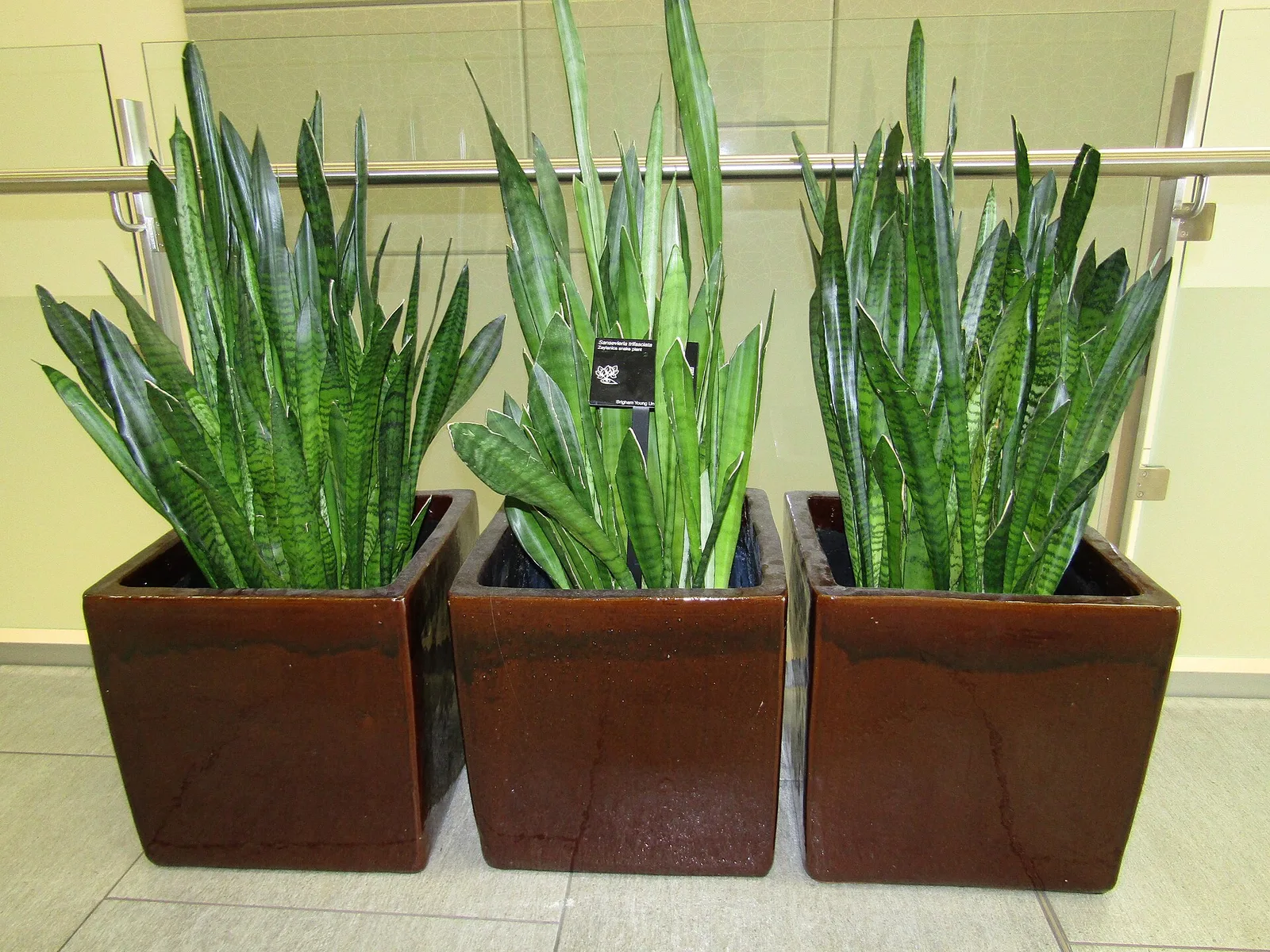
Snake plants have tall, stiff, sword-shaped leaves that grow straight up from the soil. They have a strong architectural quality that works well in modern, minimalist, and Scandinavian-style spaces. The upright form adds vertical interest to corners, narrow spaces, and beside furniture.
There are over 70 recognized varieties, ranging from miniature to massive. Here are the most popular:
- Sansevieria "Laurentii" — the classic. Dark green center with bright yellow edges. The most widely sold variety.
- Sansevieria "Black Coral" — deep green with darker horizontal bands. Dramatic and moody.
- "Moonshine" — pale silvery-green leaves. Elegant and unusual.
- "Cylindrica" (Starfish) — round, cylindrical leaves instead of flat. Often sold braided or in fan shapes.
- "Futura Robusta" — shorter, wider leaves with silver-green coloring. More compact than Laurentii.
- "Whale Fin" (Masoniana) — single massive paddle-shaped leaf. A statement piece.
ZZ Plant
ZZ plants have a more rounded, bushy look with gracefully arching stems lined with pairs of glossy, waxy leaflets. They look lush and tropical with a natural sheen that appears freshly polished even without cleaning. The arching form works well on shelves, desks, and as table plants.
Fewer varieties exist compared to snake plants, but they are equally striking:
- Classic ZZ — bright green, glossy leaflets on arching stems. The standard and most affordable.
- "Raven" ZZ — stunning dark purple-black foliage. New leaves emerge lime green and darken over weeks. A showstopper.
- "Zenzi" (Dwarf ZZ) — compact variety with curled, densely packed leaves. Stays smaller, perfect for shelves.
- "Zamicro" — miniature ZZ that stays under 12 inches. Great for desks and small spaces.
Detailed Care Comparison
Watering
Both are drought-tolerant, but the snake plant edges ahead here. It stores water in its thick, succulent leaves and can go 3-6 weeks without water in winter. The ZZ plant stores water in its large potato-like rhizomes underground and typically needs water every 2-4 weeks.
Both plants are far more likely to die from overwatering than underwatering. When in doubt, skip the watering. Both prefer the "soak and dry" method — water thoroughly until it runs from the drainage holes, then let the soil dry completely before watering again.
Winner: Snake Plant (slightly more drought-tolerant)
Light Tolerance
Both handle low light well, but the ZZ plant is arguably the better performer in truly dim conditions. It evolved on the forest floor in eastern Africa and is naturally adapted to lower light levels. A ZZ plant can survive in a room with only fluorescent office lighting, which is impressive. Snake plants also tolerate low light but may stop growing entirely and lose some of their variegation patterns in very dim spots.
That said, both plants prefer bright indirect light and grow faster with it. Low light tolerance does not mean low light preference — they simply will not die if that is all you can offer.
Winner: ZZ Plant (better in truly dark spaces)
Temperature
Snake plants are more cold-tolerant, handling temperatures down to 50°F without damage. ZZ plants prefer to stay above 60°F and can suffer leaf damage below 45°F. This makes snake plants the better choice for unheated spaces, drafty rooms, or near windows in winter.
Winner: Snake Plant
Humidity
Neither plant cares about humidity. Both thrive in the 30-50% humidity typical of most homes and offices. You will never need to mist, use a humidifier, or worry about pebble trays with either plant. This is one of the reasons both are so beginner-friendly.
Winner: Tie
Pest Resistance
Both plants are relatively pest-resistant, but neither is immune. Snake plants occasionally get mealybugs in the crevices where leaves meet soil. ZZ plants can attract spider mites in very dry conditions, though this is rare. Both are far less pest-prone than tropical plants like Calathea or Alocasia.
Winner: Tie
Growth Speed
Both are slow growers, but snake plants produce new leaves more frequently than ZZ plants produce new stems. A healthy snake plant in good light might push out 2-4 new leaves per growing season. A ZZ plant might produce 1-2 new stems (each with multiple leaflets) per year. If you enjoy watching your plant grow and change, the snake plant delivers slightly more visible progress.
Winner: Snake Plant (slightly faster)
Propagation Comparison
| Factor | Snake Plant | ZZ Plant |
|---|---|---|
| Division | Easy — separate clumps when repotting | Easy — separate rhizome sections |
| Leaf cuttings in water | Works well, roots in 3-6 weeks | Very slow, can take 6-12 months for rhizome to form |
| Leaf cuttings in soil | Works well, roots in 4-8 weeks | Very slow, months to see results |
| Preserves variegation? | Only through division | Division preserves Raven coloring |
| Overall speed | Moderate (weeks to months) | Slow (months to a year) |
If you enjoy propagating, the snake plant is much more rewarding. ZZ plant leaf cuttings are notoriously slow — a single leaflet placed in soil may take 6-12 months to develop a rhizome and eventually produce a new stem. Division is the practical way to multiply a ZZ plant.
Which Rooms Do They Suit?
| Room | Best Choice | Why |
|---|---|---|
| Bedroom | Snake Plant | Tall and narrow, copes with lower light and tolerates the cooler temperatures of many bedrooms. |
| Office (no windows) | ZZ Plant | Better performance in fluorescent-only light. Glossy leaves look professional. |
| Living room | Both | Both make great statement plants. Snake plant for corners, ZZ for shelves and tables. |
| Bathroom | Either | Both tolerate humidity fluctuations. Snake plant if the bathroom has a window; ZZ if it does not. |
| Entryway / hallway | Snake Plant | Tall, narrow form fits tight spaces. Handles temperature fluctuations from opening doors. |
| Kitchen | ZZ Plant | Glossy leaves resist kitchen dust and grease better. Compact form fits on counters. |
| Unheated sunroom | Snake Plant | More cold-tolerant. Can handle temps down to 50°F. |
Cost Comparison
Snake plants are often a little cheaper than ZZ plants of the same size, partly because they are quicker to propagate. Specialty varieties such as Whale Fin snake plant or Raven ZZ usually cost more. Both are widely available at garden centers, nurseries, big box stores, and online retailers.
Which Should You Choose?
- Choose Snake Plant if: You want a tall, vertical accent; you need something for a bedroom; you travel frequently and may forget to water for weeks; you enjoy propagating plants; you have a cool or drafty room; you want more variety choices.
- Choose ZZ Plant if: You want a bushy, full look; you have a very dark room or office; you want a plant that looks naturally glossy without cleaning; you prefer a rounded, tropical aesthetic; your space is warm year-round.
- Choose both: They look great together. The vertical lines of the snake plant contrast beautifully with the rounded, arching form of the ZZ plant. Together, they create visual interest through complementary shapes while sharing the same easy care routine.
The Verdict: Scenarios
| Scenario | Recommendation |
|---|---|
| Your first-ever houseplant | Either one — you cannot go wrong. Snake plant is slightly cheaper. |
| Dark office, no windows | ZZ Plant — better low-light performer |
| Frequent traveler (gone 2+ weeks) | Snake Plant — can go 4-6 weeks without water |
| Modern, minimalist apartment | Snake Plant — clean vertical lines suit the aesthetic |
| Bedroom nightstand | Snake Plant — slim, upright, low-light tolerant |
| Shelf or bookcase display | ZZ Plant — arching form fills shelf space beautifully |
| Gift for a non-plant person | ZZ Plant — very hard to kill, looks impressive |
| Want to propagate and share | Snake Plant — faster, easier propagation |
Pro Tip
Both plants are mildly toxic if ingested, so keep them away from nibbling pets and curious toddlers. For a similar look that is pet-safe, consider a Haworthia (similar architectural feel to snake plant) or a cast iron plant, Aspidistra elatior (similar glossy, low-light vibe to ZZ). Both pet-safe alternatives are also very low-maintenance.
Frequently Asked Questions
Can I keep a snake plant and ZZ plant in the same pot?
Technically you could, but it is not recommended. They have slightly different watering needs (snake plant prefers drier soil), and when sharing a pot, you cannot customize care for each. They also compete for root space. They look much better — and grow healthier — in their own pots placed side by side.
Which one is truly harder to kill?
They are extremely close, but the snake plant is arguably the tougher of the two. It tolerates colder temperatures, longer drought, and more light extremes. That said, both plants survive conditions that would kill most houseplants. If you can kill a snake plant or ZZ plant, the issue is almost certainly overwatering.
Do either of these plants actually purify air?
Not in any way you would notice. The snake plant was included in NASA's 1989 Clean Air Study (the ZZ plant was not), and that study was conducted in small sealed chambers. At normal room scale with normal ventilation, houseplants have a negligible effect on indoor air (see Do houseplants really purify air?). Enjoy them for their beauty and resilience, not as air purifiers.
My ZZ plant has yellow stems. What is wrong?
Yellow stems on a ZZ plant almost always mean overwatering. The rhizomes store so much water that the plant needs far less than you think. Let the soil dry completely between waterings. If the stems are mushy as well as yellow, check the roots for rot — you may need to remove the plant, trim rotted roots and rhizomes, and repot in fresh, dry soil.