Quick Summary
Curling leaves are a stress response. The direction of the curl — inward, upward, or downward — and the overall condition of the leaf help you identify the cause. The eight most common culprits are underwatering, low humidity, heat stress, overwatering, nutrient deficiency, pests (especially spider mites and thrips), root problems, and light stress.
When plant leaves start to curl, roll, or fold, the plant is protecting itself. Curling reduces the leaf surface area, which slows down water loss. It is a survival mechanism — and it is your cue to investigate what is stressing the plant.
The trick to diagnosing curling leaves is to look at the direction of the curl and the condition of the leaf tissue. A dry, crispy curl tells a different story than a soft, droopy curl. Let us walk through each cause.
1. Underwatering
What it looks like: Leaves curl inward or upward, edges feel dry and crispy. The soil is dry and may be pulling away from the pot edges. The plant looks generally thirsty.
This is one of the most common causes of leaf curling. When a plant lacks water, it curls its leaves to reduce the surface area exposed to air, which slows water loss through transpiration. Plants like Calatheas, Prayer Plants, and Peace Lilies are particularly prone to curling when they dry out.
How to Fix It
- Water thoroughly until it drains from the bottom of the pot
- If the soil is very dry and compacted, bottom-water for 20-30 minutes
- Most plants uncurl within a few hours to a day after a good watering
- Adjust your watering frequency — you may need to water more often, especially in warm weather
2. Low Humidity
What it looks like: Leaf edges curl inward and may also turn brown and crispy. The curling is gradual, getting worse over weeks. Most common in winter when indoor heating dries the air.
Tropical houseplants evolved in humid environments. When humidity drops below 40-50%, many start to curl their leaves as a moisture-conservation response. Calatheas, Ferns, Alocasias, and Anthuriums are the most humidity-sensitive common houseplants.
How to Fix It
- Run a humidifier near your plants — the most effective solution
- Group humidity-loving plants together to create a microclimate
- Use a pebble tray filled with water beneath the pot
- Move sensitive plants to a bathroom or kitchen where humidity is naturally higher
- Aim for 50-60% humidity for most tropical plants
Pro Tip
Invest in a small digital hygrometer (humidity meter) and place it near your plants. They are inexpensive and take the guesswork out of humidity management. You might be surprised how dry your home actually is in winter.
3. Heat Stress
What it looks like: Leaves curl upward or inward, sometimes with drooping. The plant is near a heat source — radiator, heating vent, sunny window, or in a room that gets very warm in the afternoon.
When temperatures climb above 85 degrees Fahrenheit (or when a heat source directly blows warm air on the plant), leaves curl to protect themselves. The curling reduces the surface exposed to heat and helps the plant retain moisture.
How to Fix It
- Move the plant away from direct heat sources
- If the plant is in a very warm room, improve air circulation with a fan (pointed away from the plant, not directly at it)
- Make sure the plant is adequately watered — heat stress and underwatering often happen simultaneously
- Most plants prefer 65-80 degrees Fahrenheit
4. Overwatering
What it looks like: Leaves curl downward, feel soft and limp (not crispy). The soil is wet. Leaves may also be yellowing. Stems may feel soft at the base.
Overwatered roots lose the ability to function properly, and the plant cannot get water to its leaves — even though the soil is soaked. The leaves curl downward and droop. This is often mistaken for underwatering, leading people to water even more.
How to Fix It
- Stop watering and let the soil dry out
- Check the roots for rot (brown, mushy roots)
- If root rot is present, trim the rotted roots, treat with hydrogen peroxide, and repot in fresh, well-draining soil
- Improve drainage by adding perlite to your soil mix
5. Nutrient Deficiency
What it looks like: Leaves curl and may also show discoloration — pale green, yellow between the veins, or dark spots. Growth is slow and new leaves come in smaller than normal. The plant has not been fertilized in a long time or has been in the same soil for over a year.
Key nutrient deficiencies that cause curling:
- Nitrogen deficiency: Older leaves turn pale yellow-green and curl
- Potassium deficiency: Leaf edges curl and brown
- Calcium deficiency: New growth curls and is distorted
How to Fix It
- Apply a balanced liquid houseplant fertilizer at half the recommended strength
- Feed every 2-4 weeks during the growing season (spring and summer)
- If the plant has been in the same soil for over 2 years, repot with fresh potting mix
- Do not overfertilize in an attempt to fix it fast — excess fertilizer causes its own set of problems
6. Pest Damage (Spider Mites and Thrips)
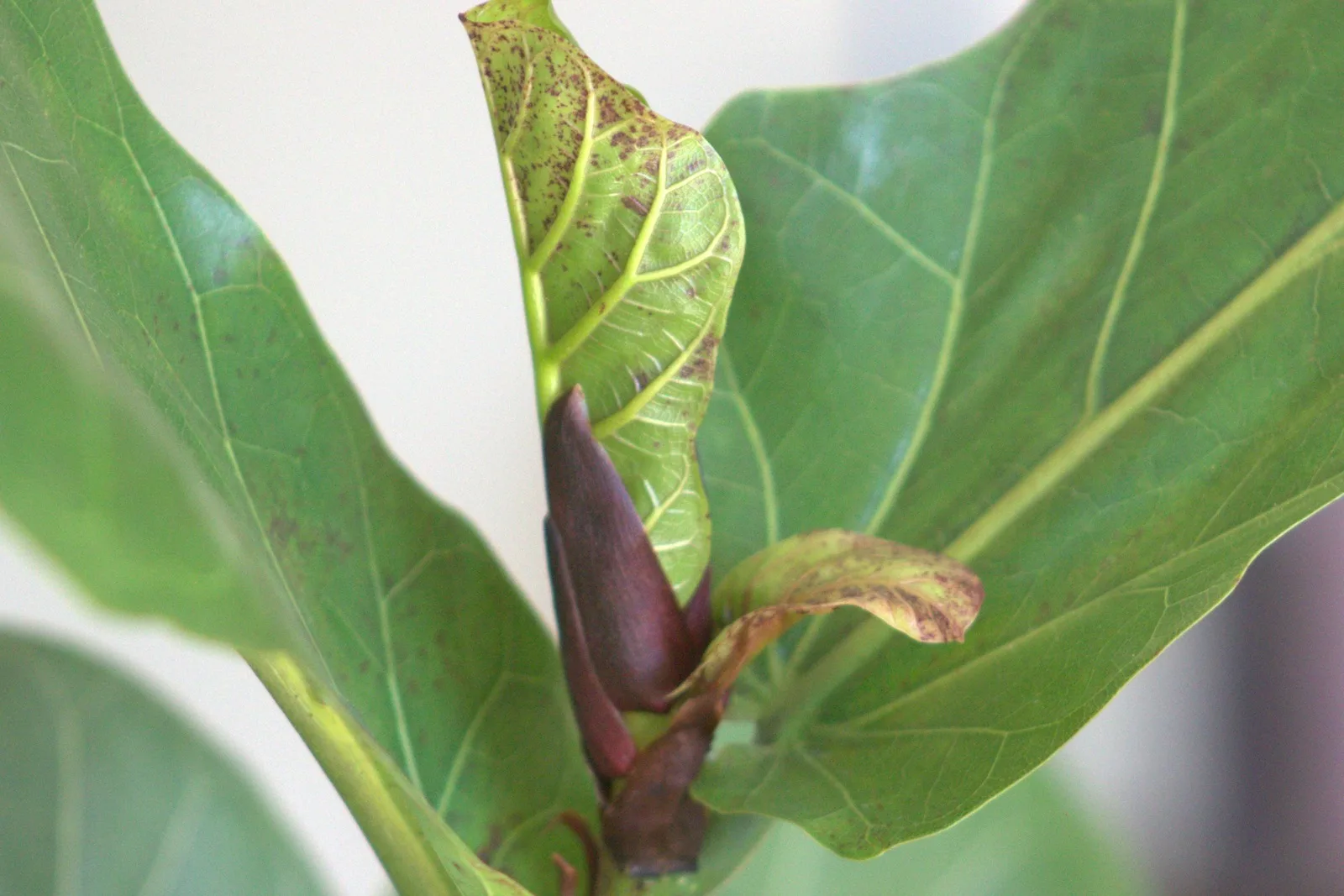
What it looks like: Leaves curl, often with tiny speckling or stippling (lots of small dots). You may see fine webbing (spider mites) or tiny elongated insects on the leaf surface (thrips). New leaves emerge distorted or curled.
Spider mites are nearly invisible to the naked eye — they are about the size of a grain of sand. But the damage they do is unmistakable: thousands of tiny puncture marks where they have fed on plant cells, causing the leaf to curl and eventually bronze or dry out. They love hot, dry conditions, which is why they often appear in winter when heating dries the air.
Thrips are slender, elongated insects that rasp the surface of leaves, causing silvery streaks and curling. They can also transmit plant viruses.
How to Fix It
- Isolate the affected plant immediately
- For spider mites: increase humidity (they hate moisture), wipe leaves with a damp cloth, and spray with neem oil or insecticidal soap every 5-7 days for 3-4 weeks
- For thrips: remove heavily damaged leaves, spray with spinosad-based insecticide or neem oil every 7 days for 4 weeks
- Check all nearby plants — these pests spread easily
Warning
Spider mites reproduce explosively in warm, dry conditions. A small population can become thousands in a few weeks. At the first sign of webbing or stippling, take action. Waiting even a week can make the difference between easy treatment and a full-blown infestation.
7. Root Problems
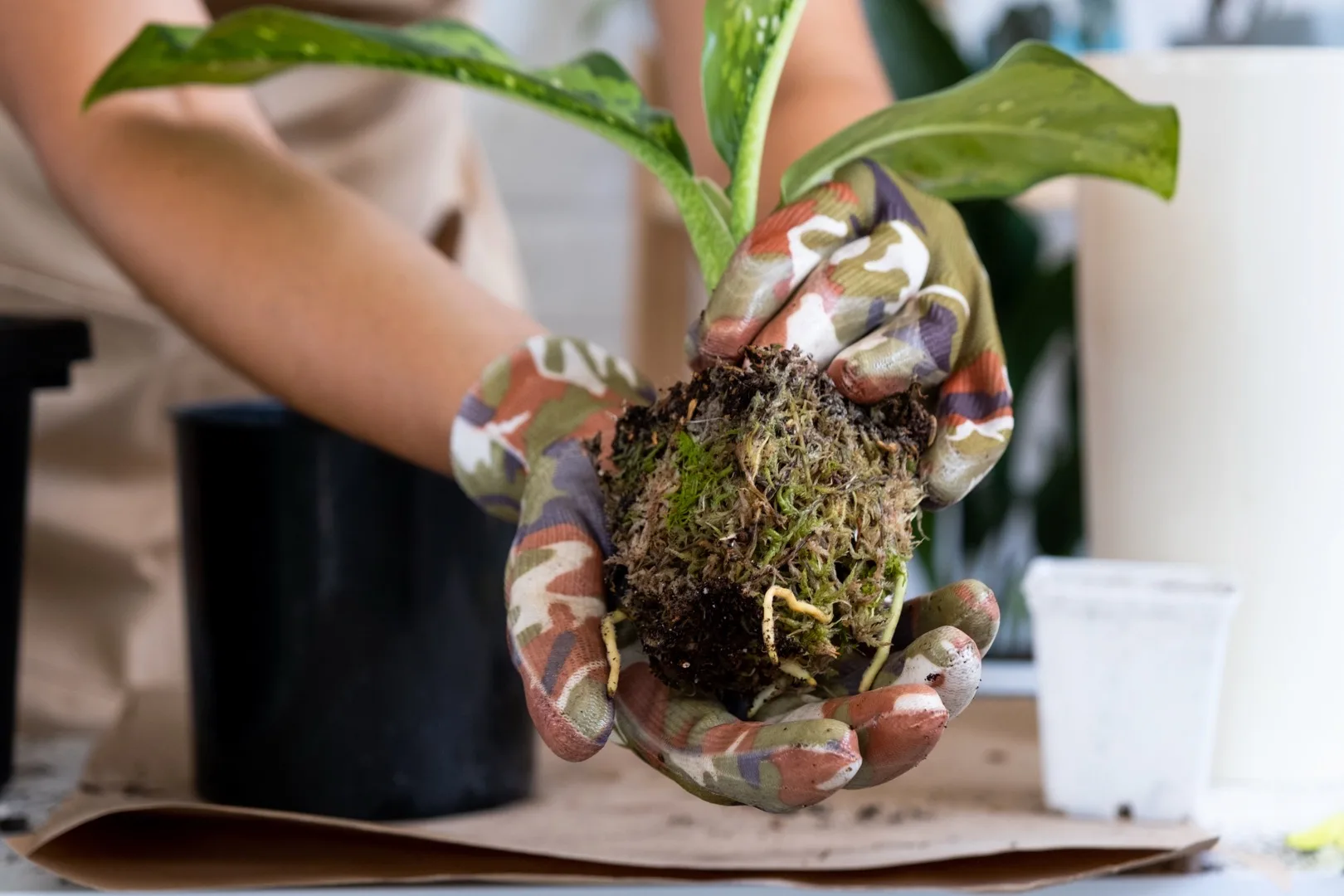
What it looks like: Curling leaves that do not respond to watering or humidity changes. The plant may also be growing slowly or not at all. When you check, the roots may be circling the pot (root bound), rotted, or dried out.
Root issues prevent the plant from absorbing water and nutrients, no matter how well you care for the above-ground parts. If you have ruled out watering, humidity, and pests, the roots are the next thing to investigate.
How to Fix It
- Root bound: Repot into a pot 1-2 inches larger, gently loosening the root ball
- Root rot: Trim dead roots, treat, and repot in fresh soil
- Dried/dead roots: Carefully rehydrate with bottom watering. If most roots are dead, consider propagating the plant from stem cuttings
8. Light Stress
What it looks like: Leaves curl away from or toward the light source. Plants in too much light may curl inward to protect themselves. Plants in too little light may develop thin, stretched leaves that curl under their own weight.
Light stress curling is usually gradual and accompanied by other light-related issues like bleaching (too much light) or legginess (too little light).
How to Fix It
- If curling away from light: the plant is getting too much direct sun. Move it back from the window or add a sheer curtain.
- If thin, floppy leaves: the plant needs more light. Move it closer to a window or supplement with a grow light.
- Acclimate gradually when moving plants to brighter or dimmer locations — sudden changes cause more stress.
Reading the Curl: A Quick Guide
| Curl Direction | Leaf Condition | Most Likely Cause |
|---|---|---|
| Inward/upward | Dry, crispy edges | Underwatering, low humidity |
| Inward/upward | Green but dry | Heat stress |
| Downward | Soft, yellow, limp | Overwatering |
| Inward with stippling | Speckled, webbing | Spider mites |
| Distorted new growth | Pale, small | Nutrient deficiency |
| Away from light | Bleached patches | Too much direct light |
Frequently Asked Questions
Will curled leaves uncurl after fixing the problem?
It depends on the severity. Mild curling from underwatering or humidity often reverses within hours to days. Severe curling that has caused permanent tissue damage (crispy, brown areas) will not uncurl — but the damaged portions can be trimmed and the plant will produce new, healthy leaves once the underlying cause is resolved.
Why are only the new leaves on my plant curling?
New leaf curling usually points to calcium deficiency, pest damage (thrips love new growth), or environmental stress during leaf development. Check for pests first, then consider whether the plant needs fresh soil or gentle fertilization.
My Calathea leaves curl every night — is that normal?
Yes. Calatheas and other Prayer Plants (Marantaceae family) naturally fold and curl their leaves at night and unfurl them in the morning. This is called nyctinasty, and it is completely normal behavior driven by their internal clock. If the leaves stay curled during the day, that is when you should investigate further.
Sources and further reading
- Leaf damage on houseplants — Royal Horticultural Society
- How to help a poorly houseplant — Royal Horticultural Society