Quick Summary
A drooping plant is trying to tell you something, and one of the most common causes is simply thirst. But overwatering, temperature shock, being root bound, transplant stress, pests, and too much light can also cause wilting. Here is how to diagnose the real problem and fix it.
Few things are more alarming to a plant parent than walking into a room and seeing your once-perky plant slumped over like it has given up on life. Drooping — technically called wilting — happens when the cells in a plant's leaves and stems lose their internal water pressure (turgor pressure). Without that pressure, the structure goes limp.
The tricky part is that several very different problems all cause the same symptom. The good news is that with a quick investigation, you can usually figure out the cause and have your plant standing tall again.
1. Underwatering (A Very Common Cause)
How to tell: The soil is dry. The pot feels light. The leaves are drooping and may also feel thin, papery, or slightly crispy at the edges.
This is the first thing to check because it is one of the most common reasons for drooping. When the soil dries out, roots cannot pull water into the plant, and the cells lose their turgor pressure.
The Finger Test
Stick your index finger about two inches into the soil. This is the most reliable free tool you have for checking moisture:
- Bone dry at two inches deep — your plant needs water. This is almost certainly why it is drooping.
- Moist at two inches — the problem is not underwatering. Move on to cause #2.
- Wet and cold at two inches — the soil is waterlogged. See cause #2.
How to Fix It
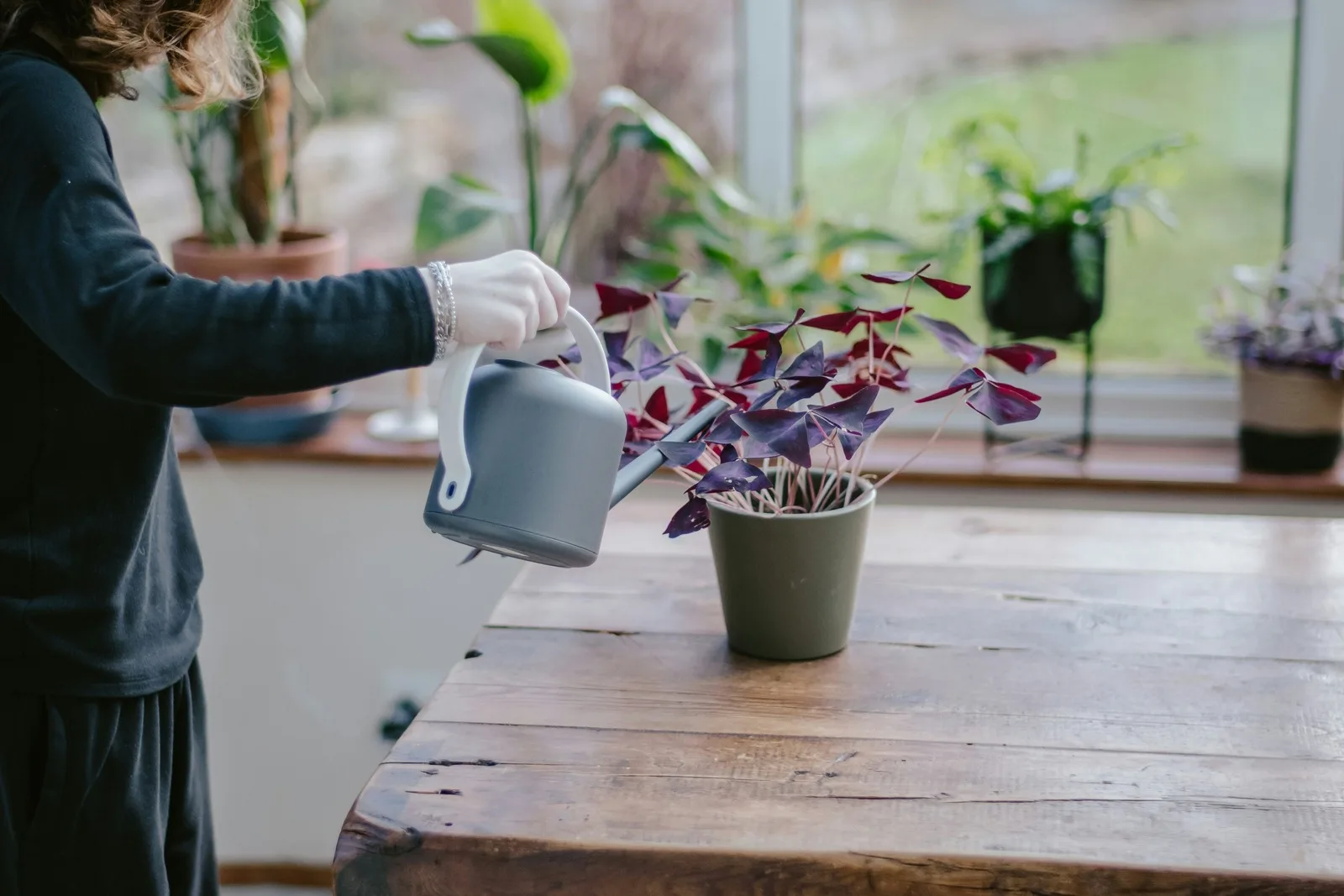
Water the plant thoroughly. Place it in a sink or tray and water until it runs from the drainage holes. If the soil is so dry that water runs straight through without absorbing, bottom-water instead: sit the pot in a few inches of water for 20-30 minutes and let the soil wick moisture upward.
Most underwatered plants perk up within a few hours of a good drink. Peace Lilies are famous for their dramatic wilt-and-recovery act — they droop flat on the table and spring back to life within an hour of watering.
Pro Tip
If your plant keeps drooping between waterings, it might be root bound — the roots have filled the pot and there is not enough soil left to hold moisture. Check cause #5 below.
2. Overwatering
How to tell: The soil is wet. The pot feels heavy. The leaves are drooping but also look yellow, and they feel soft or mushy rather than dry and crispy. There may be a sour smell.
This is the confusing one. Overwatered plants droop because waterlogged roots cannot function — they suffocate, rot, and lose the ability to deliver water to the leaves. So the plant wilts from dehydration even though the soil is soaking wet. Many people see the wilt, assume the plant is thirsty, and water even more, making the problem worse.
How to Fix It
- Stop watering immediately
- Remove the plant from its pot and check the roots
- If roots are white and firm, let the soil dry out in a well-ventilated spot
- If roots are brown and mushy, you are dealing with root rot — trim the dead roots, treat with hydrogen peroxide solution, and repot in fresh well-draining soil
3. Temperature Shock
How to tell: The drooping happened suddenly, often after the plant was moved, brought home from the store, or exposed to a cold draft or heat source. The soil moisture is fine.
Most houseplants are tropical and prefer temperatures between 60-80 degrees Fahrenheit. A sudden drop (like being left by an open window in winter) or spike (like being placed near a heating vent or radiator) can cause rapid wilting.
How to Fix It
- Move the plant to a stable, moderate temperature location
- Avoid spots near exterior doors, drafty windows, heating vents, radiators, and fireplaces
- Give the plant time — it should recover within a few days if no permanent damage was done
- Remove any leaves that have turned black or brown from the temperature shock
4. Transplant Shock
How to tell: The drooping started within a day or two of repotting, moving the plant, or bringing a new plant home. Soil moisture, temperature, and light are all appropriate.
Repotting disturbs the root system. Moving a plant changes its light, humidity, and air flow. Even just driving a plant home from the nursery is stressful — it went from a climate-controlled greenhouse to the back seat of your car.
How to Fix It
- Leave it alone. Seriously. The biggest mistake people make during transplant shock is fussing over the plant — moving it around, watering extra, fertilizing.
- Place it in moderate indirect light (not intense sun)
- Keep watering consistent but not excessive
- Most plants recover from transplant shock within 1-3 weeks
5. Root Bound
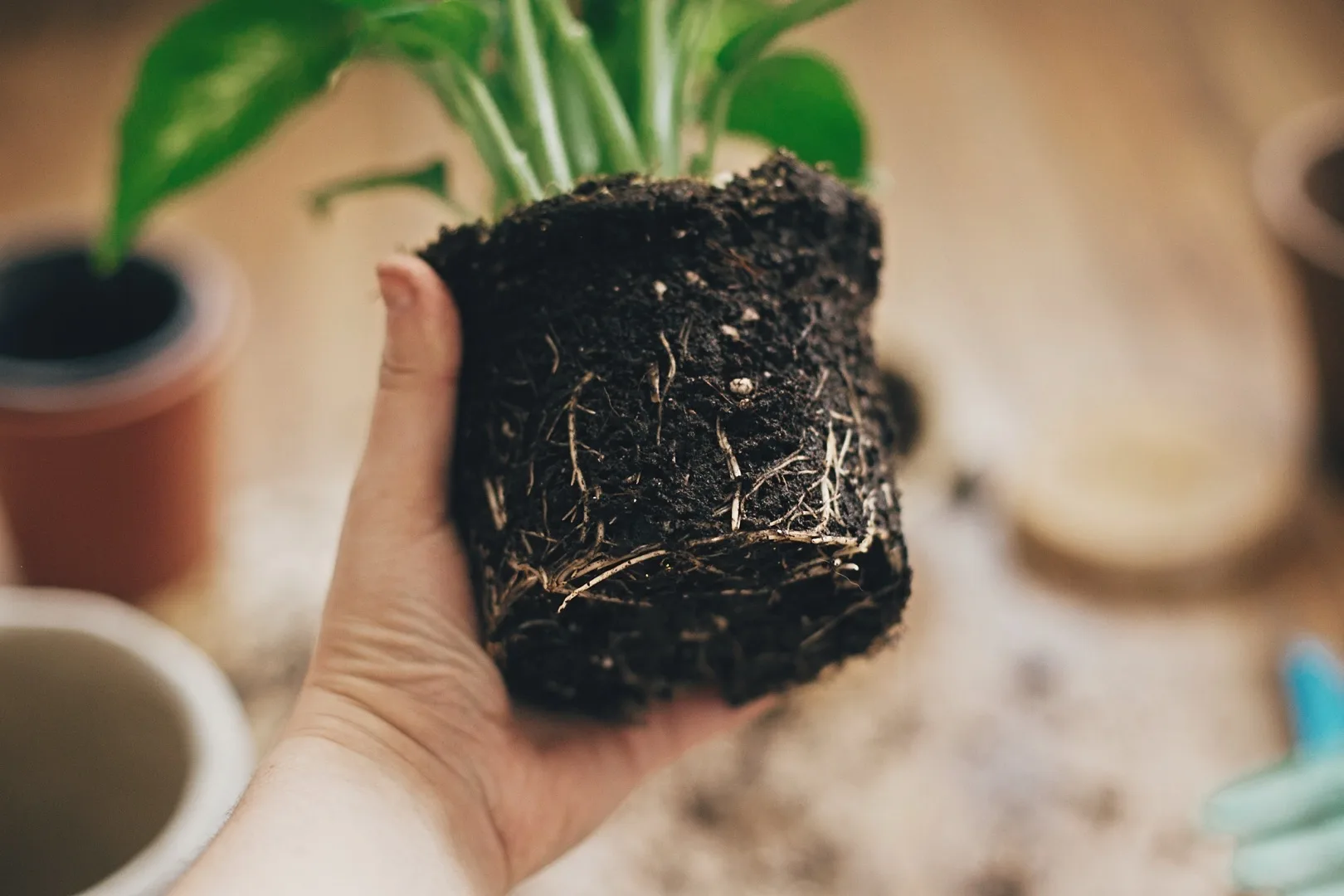
How to tell: The plant droops quickly between waterings — you watered it two days ago and it is already wilting again. When you remove it from the pot, the roots are a dense, tangled mass circling the bottom with very little soil visible. Roots may be growing out of the drainage holes.
A root-bound plant has outgrown its pot. There is not enough soil to hold moisture, so the plant dries out much faster than it should. The roots are also competing for limited nutrients.
How to Fix It
- Repot into a container 1-2 inches larger in diameter
- Gently loosen the root ball before placing it in the new pot — tease apart circling roots so they grow outward into the fresh soil
- Use fresh potting mix appropriate for the plant type
- Water thoroughly after repotting
Pro Tip
Do not jump to a much larger pot. Going more than 2 inches up in diameter means a lot of extra soil that stays wet and can lead to overwatering and root rot. One size up is the sweet spot.
6. Pest Infestation
How to tell: Drooping accompanied by other signs — sticky residue on leaves, tiny webs, small bumps on stems, white cotton-like clusters, or visible insects. Leaves may also show stippling, yellowing, or distortion.
Heavy pest infestations drain the plant of its sap, literally sucking the life out of it. Spider mites, mealybugs, scale, and aphids are common culprits. By the time a plant droops from pest damage, the infestation is usually well-established.
How to Fix It
- Isolate the plant from your other plants immediately
- Identify the pest (check undersides of leaves, along stems, and at leaf joints)
- Wipe down leaves with a neem oil solution or insecticidal soap
- For stubborn infestations, treat with a systemic insecticide
- Repeat treatment every 7-10 days for at least 3-4 rounds to break the lifecycle
7. Too Much Direct Light
How to tell: The plant droops during the brightest part of the day (afternoon) but recovers by evening or morning. Leaves facing the window may also show bleaching or scorching. This is most common in summer when the sun is strongest.
Plants that prefer indirect light — like Pothos, Calatheas, and Ferns — can wilt when exposed to intense direct afternoon sun. The heat causes the plant to lose water faster than the roots can replace it, leading to temporary wilting.
How to Fix It
- Move the plant back from the window or add a sheer curtain
- If the plant is in a south- or west-facing window, morning sun (east-facing) is gentler
- Some drooping from heat stress is temporary and the plant will recover in the evening — but repeated stress weakens the plant over time
A Quick Diagnostic Flowchart
Follow these steps to diagnose your drooping plant quickly:
- Check soil moisture. Dry? Water it. Soaked? Stop watering, check roots.
- Check for recent changes. Did you repot, move, or buy the plant recently? Give it time to adjust.
- Check temperature and placement. Is it near a vent, draft, or heating source? Move it.
- Check for pests. Look under leaves and along stems. Treat if found.
- Check the roots. Root bound? Repot up one size. Mushy roots? Treat root rot.
- Check the light. Droops in afternoon, recovers at night? Too much direct sun.
Frequently Asked Questions
How fast should a drooping plant recover after watering?
If the cause was underwatering, most plants begin to perk up within 2-6 hours and look fully recovered by the next day. Peace Lilies and Fittonias are speed champions — they can go from flat on the table to fully upright in under an hour. If your plant does not respond within 24 hours, the problem is not underwatering.
Why is only one side of my plant drooping?
One-sided drooping usually points to root damage on that side (possibly from localized rot), a cold draft hitting one side of the plant, or pest damage concentrated on specific stems. Check the roots and the environment around the drooping side.
My plant droops every afternoon but recovers at night — is this normal?
Some plants do this naturally as a mild response to afternoon heat and light, especially Peace Lilies and Calatheas. If the plant looks healthy otherwise and the soil is appropriately moist, this mild daily wilting is not a crisis. But if you want to prevent it, reduce the light intensity or increase watering slightly.
Can a severely wilted plant come back?
It depends on how long it has been wilted and the cause. An underwatered plant that has been wilted for a day or two usually recovers fully. An overwatered plant with severe root rot is harder to save. As a general rule, if the stems are still firm and green, the plant has a good chance. If the stems are mushy or the crown (where the stems meet the soil) is soft and dark, the odds are much lower.
Sources and further reading
- Why is my houseplant wilting? — Iowa State University Extension and Outreach
- How to help a poorly houseplant — Royal Horticultural Society
- Houseplant Problems — UC Statewide IPM Program (University of California)