Quick Summary
Succulents can be propagated from leaves, stem cuttings, or offsets (pups). Leaf propagation is the most popular and produces the most new plants, but stem cuttings are faster and more reliable. Always let cuts callus before planting. Best results in spring and summer with bright indirect light and well-draining soil.
One of the best things about succulents is how easy they are to multiply. Learning how to propagate succulents from leaves and stems means you can grow dozens of new plants from a single mother plant, completely free. It is one of the most rewarding parts of owning succulents, and once you start, it becomes addictive.
Three Propagation Methods Compared
Before diving into the step-by-step instructions, here is a quick comparison to help you decide which method to use:
| Method | Speed to Root | Speed to New Plant | Typical Success Rate | Difficulty | Number of New Plants |
|---|---|---|---|---|---|
| Leaf propagation | 2-3 weeks | 6-12 weeks | 50-80% | Easy | Many (one per leaf) |
| Stem cuttings | 1-3 weeks | 3-6 weeks | 80-95% | Easy | 1-3 per cutting |
| Offsets / Division | Already rooted | Instant | 95%+ | Very easy | 1-5 per parent |
Best Time to Propagate
Succulents propagate best during their active growing season — spring and early summer (March through June in the Northern Hemisphere). During this period, the mother plant is producing growth hormones that also fuel root development in cuttings. You can propagate in late summer and fall with slightly slower results. Avoid winter propagation if possible — low light and cool temperatures drastically reduce success rates and slow everything down.
Top 5 Easiest Succulents for Beginners to Propagate
If you are just starting out, these species are the most forgiving and have the highest success rates:
- Echeveria — the gold standard for leaf propagation. Thick, fleshy leaves root easily and produce beautiful rosette babies. Try Echeveria "Lola" or Echeveria "Perle von Nürnberg."
- Graptoveria (Graptosedum) — hybrids between Graptopetalum and Echeveria. Leaves practically propagate themselves and grow fast.
- Sedum — especially Sedum rubrotinctum (Jelly Bean Plant). Leaves and stems root incredibly fast, and fallen leaves often self-propagate in the pot.
- Graptopetalum paraguayense (Ghost Plant) — one of the fastest propagators. Leaves root within a week in warm conditions and produce babies quickly.
- Kalanchoe — some species like Kalanchoe daigremontiana (Mother of Thousands) produce plantlets along their leaf margins that you simply pluck and pot up.
Pro Tip
Start your propagation journey with Echeveria or Sedum — they are extremely forgiving and give you fast, visible results. Once you have those down, branch out to trickier species.
Leaf Propagation (Step-by-Step)
This works best with rosette-type succulents like Echeveria, Graptoveria, and Sedum. It is the most popular method because a single plant can donate dozens of leaves.
- Choose healthy leaves. Pick plump, firm leaves from the lower part of the plant. Avoid any that are damaged, shriveled, or yellowing. Younger leaves from the top of the rosette have lower success rates — the mature lower leaves contain more stored energy.
- Twist gently. Grip the leaf near the stem and twist it off with a clean snap. You need the entire leaf base intact — a torn leaf (where part of the base stays on the stem) will not propagate. The base is where roots and the new baby plant emerge.
- Let them callus. Lay the leaves on a paper towel or dry surface in indirect light for 2-5 days until the cut end dries and forms a hard, whitish callus. This is the single most important step in succulent propagation.
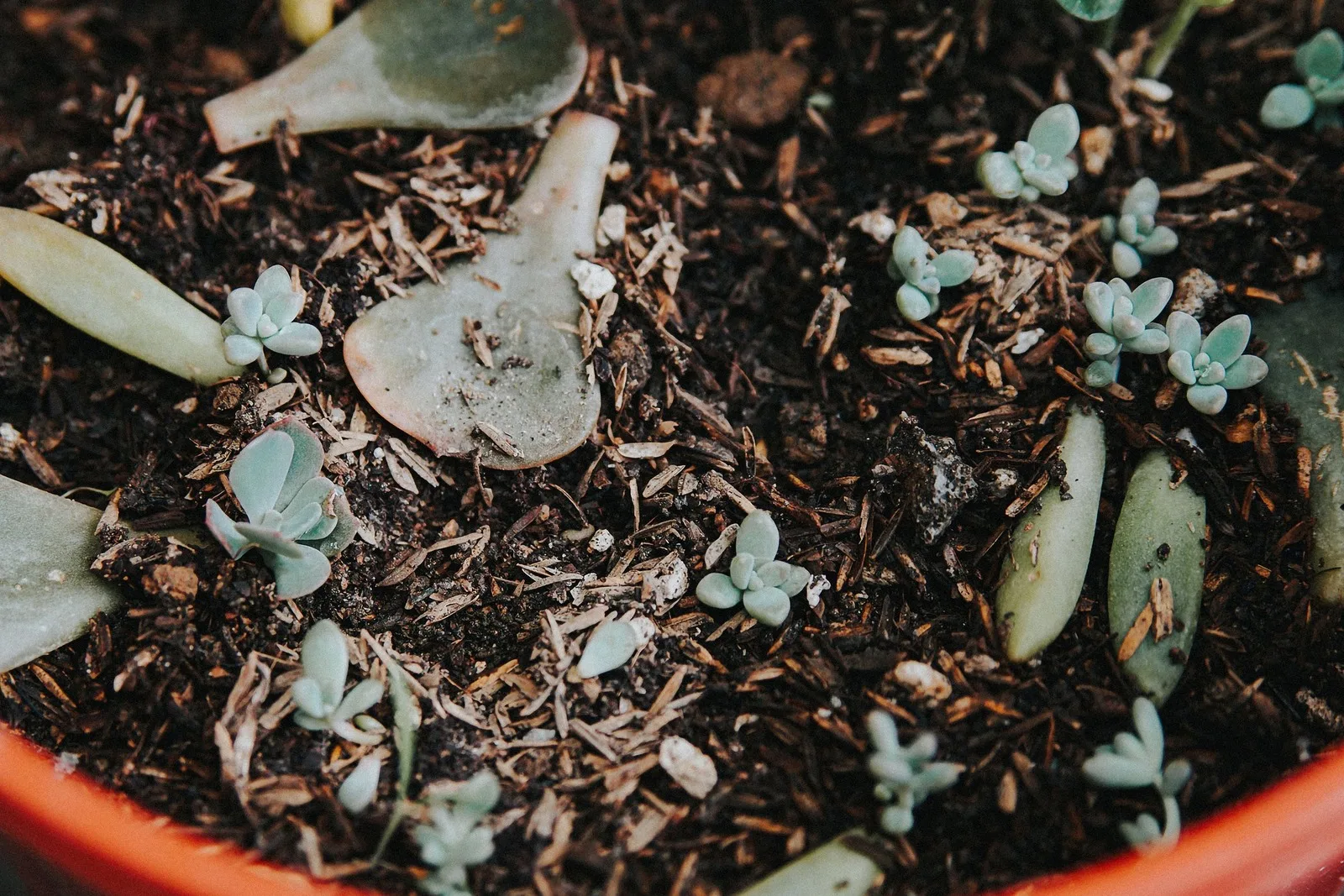
- Place on soil. Lay the callused leaves on top of a tray of dry succulent soil. Do not bury them — just set them on the surface. Some people angle the callused end slightly toward the soil, but laying them flat works fine.
- Mist lightly. Once you see tiny pink roots emerging (usually 2-3 weeks), mist the roots every 2-3 days with a spray bottle. Do not soak the soil — just a light mist directly on the roots.
- Wait for baby plants. A tiny rosette will form at the base of the leaf over 4-8 weeks. The mother leaf will shrivel as the baby absorbs its nutrients. Do not remove the mother leaf prematurely — let it fall off on its own.
- Pot up. Once the mother leaf has completely shriveled and the baby has its own roots, gently pot it in a small container (2-3 inch pot) with succulent mix. Begin regular watering.
Why Callousing Matters
Callousing is the process of letting the cut end of a leaf or stem dry out and form a protective barrier before it contacts moisture. Here is why it is non-negotiable:
- Prevents rot. A fresh, wet cut exposed to moist soil is an open invitation for bacteria and fungi. The callus seals the wound.
- Signals root growth. The drying process triggers the plant to redirect energy from the cut end toward producing new roots. Think of it as the plant recognizing it needs to find a new water source.
- Creates a one-way barrier. The callus allows roots to push outward while preventing pathogens from entering.
How do you know the callus is ready? The cut end should feel dry, slightly rough, and look whitish or pale. If it still looks moist or glossy, give it another day. In humid environments, callousing may take 3-5 days instead of 2-3.
Pro Tip
Propagate more leaves than you think you need. Success rates vary a lot by species (roughly 50-80% is a common rule of thumb), so starting with 15-20 leaves when you want 10 new plants means you will not be disappointed. The extras make great gifts.
Stem Cutting Propagation (Step-by-Step)
This method works for most succulents and is faster and more reliable than leaf propagation. It is also the best way to rescue a leggy, stretched-out (etiolated) succulent — you are essentially giving it a fresh start.
- Cut a stem. Use clean, sharp scissors or a razor blade to cut a 3-4 inch stem with several leaves. Cut just above a leaf node on the mother plant — the mother plant will produce new growth from this point.
- Remove lower leaves. Strip the bottom 1-1.5 inches of leaves to expose bare stem. Save these leaves for leaf propagation — no waste.
- Let it callus. Set the cutting aside on a dry surface in indirect light for 2-5 days. Thicker stems need more callusing time than thin ones.
- Plant in dry soil. Insert the bare stem into succulent mix, burying about an inch. Do not water for a week. The cutting needs time to begin rooting before encountering moisture.
- Begin watering. After a week, water lightly. Allow the soil to dry completely between waterings. The cutting should root within 2-3 weeks. You will know it has rooted when it resists a gentle tug.
- Resume normal care. Once rooted (3-4 weeks), treat it as an established succulent — full sun transition, regular watering schedule, and normal feeding.
Offset (Pup) Propagation
Many succulents like Aloe, Haworthia, Sempervivum (Hen and Chicks), and Agave produce offsets or pups — baby plants that grow from the base of the mother plant or from underground runners. This is the easiest and most reliable propagation method.
- Wait until the pup is at least one-third the size of the mother plant. Smaller pups have lower survival rates because they have less stored energy.
- Gently separate it from the mother, keeping as many roots as possible. For pups connected by a runner, use clean scissors to cut the connecting stem.
- If the pup has its own roots, you can pot it immediately in succulent mix.
- If you had to cut it free and it has no roots, let the cut callus for a day, then pot and treat it like a stem cutting (no water for a week).
Success Rate by Method and Species
These figures are a rough guide only — results vary with the plant, the season and your growing conditions.
| Succulent | Typical Leaf Prop Success | Typical Stem Cutting Success | Offsets Available? | Notes |
|---|---|---|---|---|
| Echeveria | 70-80% | 90%+ | Sometimes | Best overall for leaf propagation |
| Sedum | 60-80% | 95%+ | Yes | Fallen leaves often self-propagate |
| Graptoveria | 70-85% | 90%+ | Sometimes | Fast rooting, very reliable |
| Haworthia | 20-40% | Low | Yes (best method) | Leaf prop is unreliable; use offsets |
| Aloe | Very low | Moderate | Yes (best method) | Offsets are the way to go |
| Sempervivum | Very low | N/A | Yes (abundant) | Propagates almost exclusively by offsets |
| Crassula (Jade) | 40-60% | 85%+ | Sometimes | Stem cuttings far more reliable than leaves |
| Kalanchoe | 50-70% | 90%+ | Some species | Some produce plantlets on leaf margins |
Seasonal Timing Guide
| Season | Propagation Quality | Notes |
|---|---|---|
| Spring (Mar-May) | Excellent | Best time to start. Active growth hormones, increasing light. |
| Summer (Jun-Aug) | Good | Fast rooting but watch for heat stress. Provide shade for props. |
| Fall (Sep-Nov) | Fair | Still possible, slower results. Get them started before daylight drops. |
| Winter (Dec-Feb) | Poor | Avoid if possible. Low light and cold slow everything down, rot risk increases. |
Common Failures and How to Fix Them
Leaves Rot Instead of Rooting
Cause: Not enough callusing time, too much moisture, or high humidity. Fix: Extend callusing time to 4-5 days. Mist less frequently. Ensure excellent airflow around your propagation tray.
Leaves Dry Up and Shrivel Without Producing Anything
Cause: The leaf was too thin or damaged, the base was torn (incomplete), or conditions are too dry and hot. Fix: Select thicker, plumper leaves. Ensure the entire base is intact. Provide indirect light, not scorching sun.
Roots Grow but No Baby Plant Appears
Cause: Some leaves produce roots but not a new rosette. This is more common with certain species and thinner leaves. Fix: Wait — sometimes the baby takes 8-12 weeks to appear. If roots are healthy, keep misting and be patient. If nothing appears after 3 months, the leaf may not be viable.
Baby Plants Are Extremely Slow Growing
Cause: Normal for succulent propagation — they are slow growers. Also check if light is insufficient (dim conditions slow growth significantly). Fix: Ensure bright indirect light. Feed with quarter-strength succulent fertilizer monthly once the baby has its own roots. A grow light can help during winter months.
Mold on the Propagation Tray
Cause: Too much moisture and not enough airflow. Fix: Reduce misting. Improve ventilation. Remove any rotting leaves immediately — mold spreads. A light dusting of cinnamon powder on the soil surface acts as a natural antifungal.
Pro Tip
Use an egg carton as a propagation tray — each cup holds one leaf perfectly, keeps them organized, and the cardboard wicks away excess moisture. It is free, biodegradable, and works surprisingly well.
Common Mistakes
- Watering too soon. Moisture before a callus forms leads to rot every time. This is one of the most common ways succulent propagations fail.
- Burying leaves. Lay them on top of soil, do not push them in. The roots will find the soil on their own.
- Direct sunlight. Propagating leaves and cuttings burn easily. Bright indirect light is best until they are established. Gradually introduce direct sun only after the baby has its own root system.
- Giving up too early. Some leaves take 6-8 weeks to show any sign of life. Patience is key — if the leaf is still plump and firm, it is still working.
- Overwatering babies. Even after the baby appears, water sparingly. These are tiny plants with tiny root systems. A light mist every 3-4 days is plenty until they are potted up.
- Removing the mother leaf too early. The shriveling mother leaf is feeding the baby. Let it detach naturally. Pulling it off can damage the baby's connection point.
Frequently Asked Questions
Can I propagate a succulent from a leaf that fell off on its own?
Yes, as long as the leaf base is intact and the leaf is still plump and firm. Leaves that fall off naturally are often ready to propagate — they may have already begun callousing. Lay them on soil and follow the leaf propagation steps. Avoid leaves that fell because of rot or disease.
How long does it take to grow a full-sized succulent from a leaf?
From leaf to full-sized plant typically takes 6-12 months depending on the species and conditions. You will have a recognizable baby rosette within 2-3 months, but it takes several more months for it to grow to a mature size. Stem cuttings reach full size much faster — usually 2-4 months since they start with an established stem and leaves.
Can I propagate succulents in water?
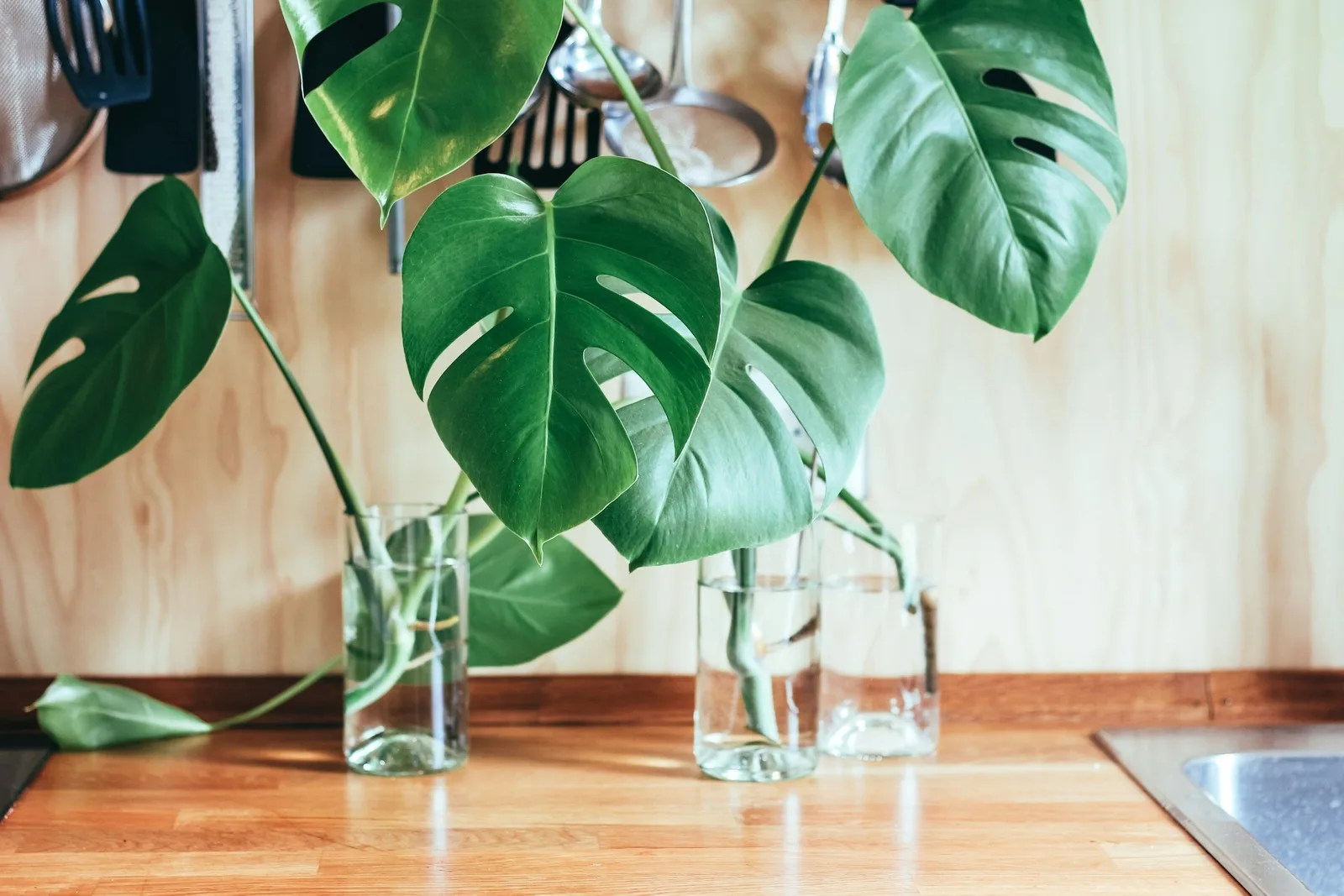
While water propagation works well for some houseplants like Pothos, it is not the recommended method for most succulents. Their leaves and stems are adapted to dry conditions, and prolonged water exposure increases rot risk. That said, some growers have success with water propagation of Echeveria and Sedum stems — the key is keeping only the very bottom of the stem in water and changing it frequently.
Why did my propagated leaves produce roots but the baby is solid green instead of the mother plant's color?
Stress colors in succulents (pinks, purples, reds, oranges) are caused by sun exposure, temperature stress, and water restriction. Baby propagations grown in indirect light with regular misting will be green. Once the baby is established and you transition it to direct sun with less frequent watering, the stress colors will develop over weeks to months.
Sources and further reading
- How to Propagate Succulents — Iowa State University Extension and Outreach
- Leaf cuttings — Royal Horticultural Society
- Succulents 101 — West Virginia University Extension