When to Repot Your Houseplant: 7 Signs It's Time
Quick Summary
- 7 reliable signs your plant needs repotting: roots from drainage, water runs through, top-heavy plant, salt crust on soil, stunted growth, soil pulling from edges, cracked or bulging pot
- Best time to repot: spring or early summer during active growth
- Go up only 1-2 inches in pot size — bigger pots cause overwatering problems
- Fast growers like Pothos need repotting every 1-2 years; slow growers like Snake Plant can wait 3+ years
- Do not repot a sick, newly purchased, or dormant plant — wait until it is stable
One of the most common questions new plant parents ask is: when should I repot my houseplant? Repot too soon and you risk waterlogged roots and unnecessary stress. Wait too long and your plant becomes rootbound, stunted, and unable to absorb water properly. The good news: your plant gives clear signals when it is ready. You just have to know what to look for.
Sign 1: Roots Are Growing Out of the Drainage Holes
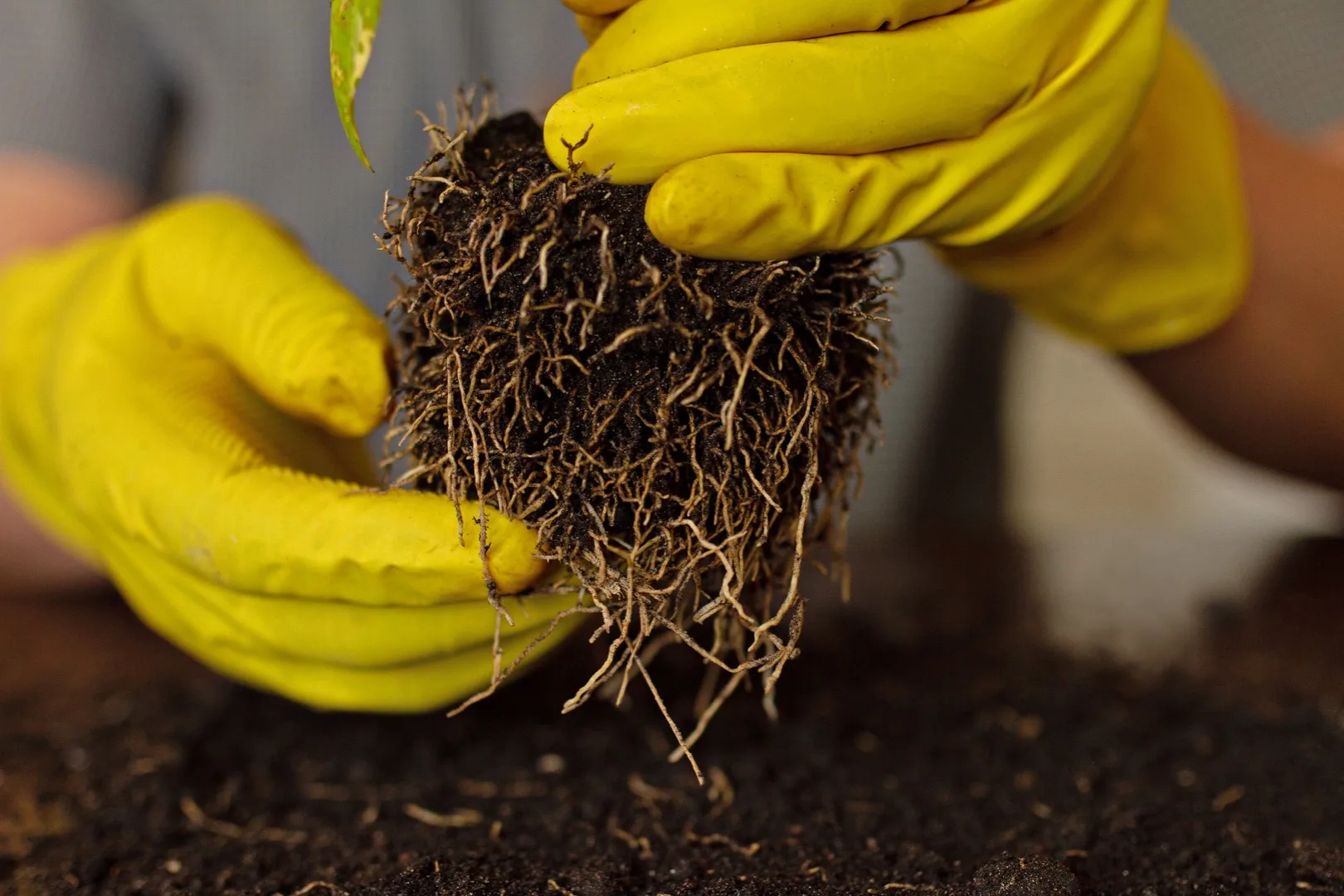
This is the most obvious sign. Flip your pot and look at the drainage holes. If you see white or tan roots spiraling around the bottom or actively poking through the holes, the plant has filled every inch of available space and is reaching outward in search of more room. This is a definitive "repot now" signal — do not wait.
Note: a single root visible at a drainage hole is not always an emergency. Some plants put one exploratory root down without being severely rootbound. The concern is when roots are actively circling, dense, or matting at the bottom.
Sign 2: Water Runs Straight Through Without Being Absorbed
Water normally soaks into the potting mix and is held there by the soil structure. When roots fill most of the pot volume, there is very little soil left to retain moisture. Water follows the path of least resistance — down the sides of the rootball and straight out the drainage holes. If you water your plant and water immediately streams out the bottom without the soil darkening or absorbing anything, roots have crowded out the soil.
This is also why rootbound plants always seem thirsty — they are. The root-to-soil ratio is so imbalanced that the plant cannot stay hydrated.
Sign 3: The Plant Is Top-Heavy and Tips Over
As a plant grows larger above the soil line, the pot needs sufficient root mass below to anchor it. When a plant becomes top-heavy and unstable — tipping when brushed or leaning to one side despite not being near a light source — it often means the root structure has not kept pace with aerial growth, or the pot has become too small relative to the plant's size.
Sign 4: White Crust or Salt Buildup on Soil Surface
A white or yellowish crusty layer on top of the soil is mineral buildup from tap water and fertilizer salts. Some buildup is normal and can be resolved by flushing the soil thoroughly. But if the crust is thick and persistent, it can prevent water from penetrating the soil evenly and can harm roots over time. When you see this alongside other signs, it is a good opportunity to repot in fresh soil.
Sign 5: Growth Has Stalled During the Growing Season
If your plant is not producing new leaves during spring or summer — when it should be actively growing — and you have ruled out light and watering problems, rootbound conditions may be the issue. When roots run out of space, they send stress signals that redirect the plant's energy away from leaf production and toward root survival.
Test: give the plant a thorough watering, ensure good light for two weeks, and watch for growth. If still nothing, lift the pot and inspect the root situation.
Pro Tip
When you unpot your plant to inspect, look at root color. Healthy roots are white or light tan. Brown, mushy, or foul-smelling roots indicate root rot — a different problem that requires removing the damaged roots and repotting in fresh, well-draining soil, not just a larger pot.
Sign 6: Soil Pulls Away From the Edges of the Pot
If you notice a gap between the soil and the inside wall of the pot — especially a gap that persists even after watering — the soil has likely become hydrophobic (water-repellent) due to age and root compression. Old potting mix loses its structure over time. The organic matter breaks down, drainage worsens, and aeration disappears. Even if the plant is not severely rootbound, soil that has been in the same pot for 3+ years probably needs refreshing.
Sign 7: The Pot Is Visibly Cracked or Bulging
Roots are remarkably strong. A severely rootbound plant can crack terracotta pots and deform plastic ones. If you notice cracks running along the sides of a terracotta pot or a plastic pot that has lost its round shape and started to bulge, root pressure is likely the cause. This plant needs repotting immediately — not just for the plant's sake, but to save your pot if possible.
Visual Signs at a Glance
| Sign | What You See | Urgency |
|---|---|---|
| Roots from drainage | White roots circling the bottom or pushing through holes | High — repot soon |
| Water runs through | Soil stays dry after watering | High |
| Top-heavy plant | Tips easily, leans without wind | Medium |
| Salt crust on soil | White/yellow crust on surface | Medium |
| Stunted growth in spring | No new leaves despite good care | Medium |
| Soil pulling from edges | Gap between soil and pot wall | Low–Medium |
| Cracked or bulging pot | Visible cracks or deformed pot | High — repot immediately |
Best Time of Year to Repot
Spring and early summer are ideal — the plant is actively growing and recovers from root disturbance quickly. Late summer works if needed. Avoid repotting in autumn and winter unless there is a specific problem (root rot, broken pot, severe rootbound condition) that cannot wait. Dormant plants do not heal root wounds efficiently.
How Often to Repot by Plant Type
| Plant | Repotting Frequency | Notes |
|---|---|---|
| Monstera | Every 1-2 years | Fast grower, needs space |
| Pothos | Every 1-2 years | Very vigorous root growth |
| Snake Plant | Every 2-3 years | Slow grower, tolerates tight pots |
| ZZ Plant | Every 2-3 years | Rhizomes grow slowly |
| Peace Lily | Every 1-2 years | Blooms better slightly rootbound |
| Fiddle Leaf Fig | Every 1-2 years | Sensitive to root disturbance |
| Rubber Plant | Every 2 years | Moderate grower |
| Succulents | Every 2-3 years | Prefer snug pots |
When NOT to Repot
Newly purchased plants: Give them 2-4 weeks to acclimate to your home environment before repotting. The combination of new location stress plus repotting stress can overwhelm a plant. Exception: if the plant is obviously rootbound and struggling in the nursery pot.
Dormant or winter-resting plants: Roots are not actively growing and heal more slowly from disturbance. Wait until spring unless there is a pressing problem like root rot.
Visibly stressed or sick plants: If a plant is dropping leaves, severely wilted, or showing signs of disease, identify and fix the problem first. Repotting a sick plant adds stress on top of stress.
Plants that bloom better rootbound: Hoyas, Peace Lilies, Anthuriums, and some Orchids produce more flowers when slightly pot-bound. Do not repot these plants at the first sign of roots at drainage holes — wait until they are clearly struggling.
Pot Size Guide
Always go up by 1-2 inches in diameter (2-4 inches for larger plants over 12 inches). A pot that is too large holds excess moisture in the areas where roots have not yet reached, creating conditions for root rot. The goal is to give roots room to expand into, not to drown them in empty wet soil.
For depth: choose a pot as deep as it is wide, unless you are growing a plant known for shallow roots (succulents, some tropical foliage plants) where a wide, shallow pot is preferable.
Frequently Asked Questions
Can I repot into the same pot? Yes — if the plant does not need more space but the soil is old and depleted, you can repot into the same size pot with fresh mix. Remove some of the old rootball edge, refresh the soil, and return to the same pot.
How long until my plant recovers from repotting? Most plants show some droopiness for 3-7 days after repotting — this is normal transplant stress. Keep the plant out of direct sun, maintain consistent moisture (not wet), and avoid fertilizing for 4-6 weeks. Most plants bounce back quickly, especially when repotted in spring.
Should I water before or after repotting? Both. Water 24 hours before repotting so roots are hydrated and less brittle. Water again immediately after repotting to help soil settle around roots and reduce air pockets.
What potting mix should I use? Use a mix appropriate for your plant type. Standard indoor potting mix for most tropical houseplants. Cactus and succulent mix for drought-tolerant plants. Orchid bark for epiphytes. Avoid garden soil — it compacts in pots and does not drain properly.
Written by
Plant Care Club
The Plant Care Club team combines years of hands-on plant parenting with science-based research to create guides you can actually trust. We test, we grow, we learn — so you can too.
94 articles published
Was this helpful?
Thanks for your feedback!
Related Articles
 Air Purifying
15 Best Air Purifying Plants for Your Home (Science-Backed)
Discover the 15 best air purifying plants backed by science — with care difficulty, pet safety ratings, and which room each one works best in.
 Air Purifying
Does Snake Plant Really Purify Air? Facts vs Fiction
Does the snake plant really purify air? We break down the NASA study, what toxins snake plants actually filter, and how many you need for a real effect.
 Plant Styling
Best Indoor Herb Garden Kits for 2026 (Tested & Ranked)
AeroGarden, Click & Grow, Gardyn, and five more indoor herb garden kits reviewed and ranked for 2026. Find the best kit for your kitchen and budget.