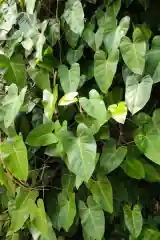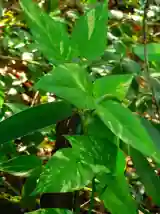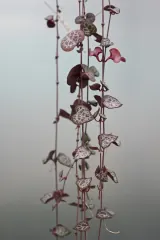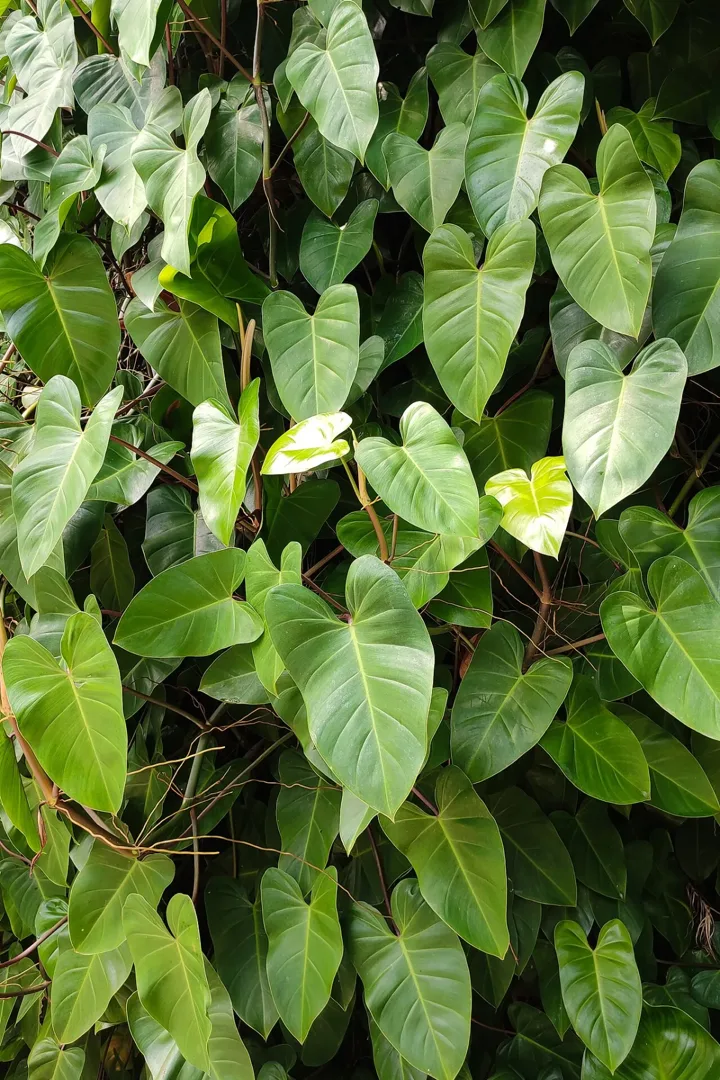
Pothos vs philodendron — this is one of the most common mix-ups in the plant world. They look similar at first glance, especially the Heartleaf Philodendron and Golden Pothos. Even plant shops mislabel them. But they are actually different genera with distinct characteristics. Once you know what to look for, telling them apart becomes second nature. Here is a detailed identification guide plus care comparison.
Quick Identification Table
| Feature | Pothos (Epipremnum aureum) | Heartleaf Philodendron (Philodendron hederaceum) |
|---|---|---|
| Leaf texture | Thicker, waxy, slightly bumpy/ridged | Thinner, smoother, matte to silky |
| Leaf shape | Wider, more irregular, asymmetrical | More uniformly heart-shaped, symmetrical |
| Leaf thickness | Noticeably thicker — almost succulent-like | Thinner, more delicate |
| New growth color | Lighter version of mature leaf color | Often brownish, pinkish, or coppery |
| New leaf emergence | Unfurls from existing leaf/stem | Emerges from a cataphyll (protective sheath) |
| Stems | Thicker, same green as leaves | Thinner, often brownish or orangish tint |
| Aerial roots | Thick, stubby, one per node | Thinner, stringy, multiple per node |
| Petiole cross-section | Indented on top (C or U shape) | Perfectly round |
| Scientific family | Araceae (Epipremnum) | Araceae (Philodendron) |
| Native region | French Polynesia / Southeast Asia | Central and South America |
Detailed Identification Guide
1. Leaf Texture and Feel
This is the easiest test. Pick up a leaf from each plant and run your finger across the surface:
- Pothos leaves feel thicker, waxier, and slightly textured. There is a subtle ridge along the midrib on the top surface. The leaf feels firm, almost leathery. If you hold it up to light, it appears less translucent because of its thickness.
- Philodendron leaves are thinner, smoother, and more uniformly textured. They feel almost silky or velvety to the touch. Hold one up to light and you can see more light passing through because the leaf is thinner.
2. Leaf Shape
- Pothos: Leaves are wider relative to their length, slightly asymmetrical, and have a more irregular outline. The base of the leaf (where the petiole attaches) has a less pronounced heart shape.
- Philodendron: Leaves are more uniformly heart-shaped (hence "heartleaf"), symmetrical, and the heart notch at the base is more defined and deeper.
3. New Growth — The Cataphyll Test
This is the most definitive identification method:
- Pothos: New leaves unfurl directly from the vine, emerging from the side of an existing leaf. The new leaf starts tightly curled and gradually opens. There is no protective sheath.
- Philodendrons: New leaves emerge from a cataphyll — a thin, papery, protective sheath that is often pinkish, reddish-brown, or copper-colored. The cataphyll opens to release the new leaf, then gradually dries up and either falls off or can be peeled away. If you see thin, brown, papery sheaths on the stem, it is definitely a philodendron.
4. The Petiole Test
The petiole is the small stem connecting each leaf to the vine. Look at it from above or feel it between your fingers:
- Pothos petioles are indented or grooved on the upper side, creating a C or U shape if you were to cut through them in cross-section. You can feel this groove by running your finger along the top.
- Philodendron petioles are perfectly round — smooth and cylindrical with no groove.
5. Stem Structure
- Pothos stems are thicker, more rigid, and the same green as the leaves. They feel solid.
- Philodendron stems are thinner and more flexible, often with a brownish, orangish, or reddish tint, especially near the nodes.
6. Aerial Roots
- Pothos produces a single, thick, stubby aerial root per node. It looks like a small brown peg sticking out from the stem.
- Philodendrons produce multiple thinner aerial roots per node, often in small clusters. They look more stringy and wispy.
Pro Tip
The cataphyll test is the single most reliable method. If you see (or have seen) thin, papery, brown sheaths on the stems, it is a philodendron. Pothos never produce cataphylls. When in doubt, wait for new growth and watch how the leaf emerges.
Care Comparison: 10 Key Attributes
| Attribute | Pothos | Heartleaf Philodendron |
|---|---|---|
| Light tolerance | Low to bright indirect | Low to bright indirect (slightly more shade-tolerant) |
| Watering | When top 1-2" dry; more drought-tolerant | When top 1" dry; prefers slightly more consistent moisture |
| Humidity | Fine with average (40-60%) | Fine with average; appreciates slightly higher |
| Temperature | 60-85F; no cold drafts | 60-85F; no cold drafts |
| Growth rate | Fast | Fast (slightly faster in ideal conditions) |
| Max vine length | 20-40 feet in the wild; 6-10 feet indoors | 10-20 feet in the wild; 4-8 feet indoors |
| Propagation ease | Very easy in water | Very easy in water |
| Toxicity | Toxic to cats and dogs | Toxic to cats and dogs |
| Common problems | Yellow leaves from overwatering | Leggy growth in low light |
| Fertilizing | Monthly spring-summer, balanced liquid | Monthly spring-summer, balanced liquid |
The main practical difference: Pothos is marginally more drought-tolerant (its thicker leaves store more water). Philodendron is slightly more tolerant of very low light. Both are among the easiest houseplants to grow.
Popular Pothos Varieties (7 You Should Know)
- Golden Pothos: The classic. Green leaves with golden-yellow variegation. One of the most common and most forgiving varieties. Often the first houseplant people buy.
- Marble Queen: White and green marbled leaves. Needs brighter light than Golden to maintain its heavy variegation. Grows slower due to less chlorophyll.
- Neon Pothos: Solid bright chartreuse/lime green. Stunning in a dark room where the electric color pops. No variegation to maintain, so it handles low light well.
- Cebu Blue: Silvery blue-green, lance-shaped leaves. A more unusual look. Develops fenestrations (holes) like a Monstera when given something to climb.
- Jade Pothos: Solid deep green, no variegation. The best choice for low-light conditions since it has maximum chlorophyll. Extremely hardy.
- N Joy / Pearls and Jade: White and green patterned, more compact growth. Smaller leaves than Golden. Trendy but slightly more demanding about light.
- Manjula: Wide, wavy leaves with silver, white, cream, and green variegation. One of the most striking varieties. Slower growing and needs good light.
Popular Philodendron Varieties (7 You Should Know)
- Heartleaf (Philodendron hederaceum): Solid green, the classic trailing philodendron. Dead simple to care for. The one most often confused with Pothos.
- Brasil: Green leaves with a bold yellow-lime center stripe. Arguably more colorful than any Pothos variety. Loses variegation in low light.
- Micans: Velvety, iridescent leaves that shift between bronze, green, and deep maroon depending on the light angle. One of the most beautiful trailing plants period.
- Lemon Lime: Bright yellow-green throughout. Very similar to Neon Pothos at first glance — check the leaf texture and petiole to tell them apart.
- Rio: Silver and cream center stripe with green margins. A more subtle, sophisticated pattern than Brasil.
- Silver Stripe: Similar to Heartleaf but with a silver-gray stripe down the center. Relatively new to the market.
- Gabby: Heavy cream and green variegation, similar to Marble Queen Pothos. Look for the cataphyll to confirm it is a philodendron.
Commonly Misidentified Plants
Pothos and Heartleaf Philodendron are not the only plants confused in this category. Here are others that get mixed up:
- Scindapsus pictus (Satin Pothos): Despite the common name, this is NOT a true pothos. It is in the genus Scindapsus. Identified by its silvery, sparkly spots on thick, matte green leaves. Care is similar to Pothos.
- Philodendron scandens vs hederaceum: These are actually the same plant — scandens is an outdated name for what is now classified as Philodendron hederaceum.
- Neon Pothos vs Lemon Lime Philodendron: Both are solid chartreuse. Tell apart by leaf texture (Pothos is waxier) and petiole shape (Pothos has a groove).
- Epipremnum pinnatum vs Monstera: Some mature Pothos species develop fenestrations similar to Monstera, adding to the confusion. Check the stem structure and growth pattern.
Pro Tip
If you are shopping at a nursery and the plant is simply labeled "Pothos" or "Philodendron," do the touch test right there. Feel the leaf: waxy and bumpy means Pothos, smooth and silky means Philodendron. Then check the petiole: grooved = Pothos, round = Philodendron. Takes five seconds.
Cost and Availability
Both plants are among the most affordable houseplants available. Common varieties like Golden Pothos and Heartleaf Philodendron are easy to find; newer or less common varieties such as Cebu Blue Pothos, Micans Philodendron and Manjula Pothos usually cost more and can be harder to track down.
Both are excellent propagation plants — a single cutting in water can root in 1-2 weeks, making them nearly free to expand your collection.
Which Should You Choose?
Here is a decision guide based on your situation:
- You are a total beginner: Start with Golden Pothos. It is one of the most forgiving houseplants and very hard to kill.
- You have a very dark room: Go with Jade Pothos (solid green) or Heartleaf Philodendron — both handle low light better than variegated varieties.
- You want maximum color: Brasil Philodendron offers the most vibrant variegation. Neon Pothos is the boldest solid color.
- You want something unique: Micans Philodendron (velvety iridescent leaves) or Cebu Blue Pothos (silvery lance-shaped leaves) are both stunning conversation starters.
- You have pets: Unfortunately, both are toxic. Consider a trailing Hoya instead — similar trailing look, and listed as non-toxic to cats and dogs by the ASPCA. (String of Hearts is often suggested too, but it is not listed by the ASPCA — check with your vet.)
- You travel often and forget to water: Pothos is slightly more drought-tolerant than Philodendron.
- You want both: Get both. Seriously. They look beautiful trailing together from the same shelf, and the subtle differences between them create visual interest that a single plant cannot match.
See also: the short answer to Pothos vs Philodendron: how can you tell them apart?
Frequently Asked Questions
Can Pothos and Philodendron be planted together?
Yes, they have nearly identical care requirements and look great growing together in the same pot. The contrast in leaf texture and slight differences in green tones add visual depth.
Why are both called "Philodendron" at stores?
Pothos used to be classified as a Philodendron before being reclassified to the genus Epipremnum. Old labeling habits persist, especially in big box stores. This is why you sometimes see Golden Pothos sold as "Philodendron."
Which grows faster?
In ideal conditions, Heartleaf Philodendron slightly edges out Pothos in growth rate. But the difference is minimal and depends heavily on light and care conditions.