Walk into a plant shop and ask for a "prayer plant" and you might get a calathea or a maranta — the terms are used interchangeably by many sellers, but these are actually different genera within the same family (Marantaceae). They share the mesmerizing trait of moving their leaves up at night and down during the day, which earned both the "prayer plant" nickname. But their care requirements, appearance, and difficulty levels differ in ways that matter.
Quick Comparison Table
| Feature | Calathea (Goeppertia) | Maranta |
|---|---|---|
| Common name | Calathea, cathedral plant, rattlesnake plant (varies) | Prayer plant |
| Growth habit | Upright, clumping | Low, spreading, trailing |
| Leaf patterns | Highly varied — stripes, spots, geometric | Herringbone or fishbone patterns |
| Leaf movement | Yes (nyctinasty) | Yes, often more dramatic |
| Humidity needs | High (50-70%+) | Moderate to high (50-60%) |
| Difficulty | Moderate to difficult | Easy to moderate |
| Water sensitivity | Very sensitive to tap water | Somewhat sensitive |
| Size | 6 inches to 3 feet (variety dependent) | Usually under 12 inches tall |
| Pet safety | Non-toxic | Non-toxic |
| Common species | Orbifolia, medallion, rattlesnake, white fusion, ornata | Leuconeura (red, lemon lime, Kim) |
Taxonomy: The Name Game
Both belong to the Marantaceae family, often called the arrowroot or prayer plant family. Calathea has recently been reclassified as Goeppertia by taxonomists, though most shops and plant owners still use "Calathea." Maranta is the original prayer plant genus. While related, they are as distinct as, say, roses and strawberries — same family, different genera with different characteristics.
The confusion is understandable: both move their leaves, both have stunning patterns, and both are tropical understory plants from Central and South America. But the differences become clear when you grow them side by side.
Leaf Patterns and Appearance
Calathea
Calatheas are famous for their extraordinarily diverse leaf patterns. The genus contains dozens of species and cultivars, each with unique markings:
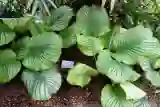
- Calathea orbifolia — Large, round leaves with silver and green stripes. Arguably the most elegant.
- Calathea medallion — Oval leaves with concentric green and purple patterns, deep purple undersides.
- Calathea rattlesnake (lancifolia) — Long, wavy-edged leaves with alternating dark and light green spots.
- Calathea white fusion — White, green, and lilac marbled leaves. Stunning but notoriously difficult.
- Calathea ornata (pinstripe) — Dark green leaves with thin pink or white pinstripes.
The leaf undersides are often deep purple or burgundy, adding a second dimension of color when the leaves lift at night.
Maranta
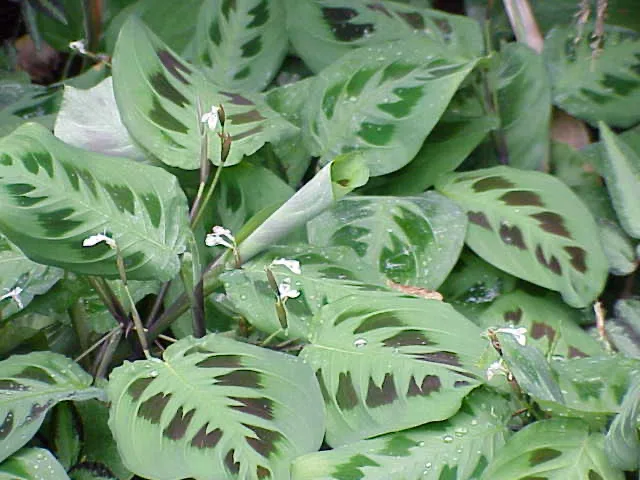
Marantas have a more consistent pattern across varieties — the classic herringbone or fishbone design. The most common species, Maranta leuconeura, has several well-known varieties:
- Red prayer plant (erythroneura) — Green leaves with dark green blotches along the midrib and striking red veins. The most popular variety.
- Lemon lime prayer plant — Lighter green with yellow-green patches and subtle veining.
- Kim — Green with purple blotches and white streaks.
- Marisela — Cream and green feathered pattern.
Maranta leaves are generally smaller and more oval than most calathea leaves, and the plants grow lower to the ground.
Growth Habit
Calatheas grow upright and clumping. They send up new leaves from a central crown, creating a bushy, mounded shape. Depending on the species, they can range from compact (6-8 inches for some varieties) to substantial (2-3 feet for orbifolia or medallion). They do not trail or vine.
Marantas grow low and spreading. They have a naturally horizontal growth habit, with stems that creep along the soil surface and eventually trail over the edge of the pot. This makes marantas excellent candidates for hanging baskets or shelf plants where the foliage can cascade. They rarely grow taller than 12 inches but can spread widely.
The Leaf Movement
Both plants exhibit nyctinasty — the movement of leaves in response to light changes. In the evening, the leaves fold upward, resembling hands in prayer. In the morning, they lower back to a horizontal position. This movement is driven by changes in water pressure in small joints (pulvini) at the base of each leaf.
Marantas tend to be more dramatic movers. The leaves fold up quite noticeably at night, sometimes nearly vertical. The movement is so pronounced that you can sometimes hear a faint rustling as the leaves shift. Calatheas also move but tend to be subtler — more of a gentle lift than a full fold. Some calathea owners do not even notice the movement until they specifically watch for it.
Care Comparison: Where It Matters Most
Humidity
This is the single biggest care factor for both plants, and the area where they differ most.
Calatheas are humidity divas. Most species want 50-70% humidity and will develop crispy, brown leaf edges in dry air faster than almost any other common houseplant. In homes with winter heating (which often drops humidity to 20-30%), calatheas suffer visibly. A humidifier is not optional for most calathea owners — it is essential equipment.
Marantas appreciate humidity but are more tolerant of average conditions. They do well at 50-60% and can handle dips to 40% without immediate complaints. Brown edges can develop in very dry air, but marantas are generally slower to show humidity stress than calatheas. A humidifier helps but is not always necessary.
Water Quality
Calatheas are notoriously sensitive to chemicals in tap water. Chlorine, chloramine, and fluoride cause brown tips and edges over time. Many calathea owners use filtered water, rainwater, or distilled water exclusively. Leaving tap water out overnight helps chlorine evaporate but does not remove chloramine or fluoride.
Marantas are somewhat sensitive to tap water but less dramatically so than calatheas. They may develop occasional brown tips from hard water but are less likely to show widespread damage. Filtered water is preferred but not as critical.
Light
Both are understory plants that prefer medium indirect light and dislike direct sun, which fades their patterns and scorches leaves. Calatheas are slightly more sensitive to excess light, while marantas can handle a touch more brightness without damage. Both do well under grow lights.
Watering
Both want consistently moist (not soggy) soil. Let the top inch dry slightly, then water thoroughly. Neither tolerates drought well — prolonged dryness causes leaf curling and brown edges. Calatheas are slightly less forgiving of missed waterings. Both are susceptible to root rot in waterlogged soil, so well-draining potting mix is essential.
Common Problems
Calathea Problems
- Crispy brown edges — Low humidity or chemical sensitivity to tap water. A very common complaint.
- Curling leaves — Underwatering or very low humidity.
- Fading patterns — Too much direct light washing out the colors.
- Spider mites — Calatheas in dry air are spider mite magnets. Inspect regularly and increase humidity.
- Brown spots — Fungal issues, often from water sitting on leaves.
Maranta Problems
- Brown leaf tips — Low humidity or hard water, but less severe than calathea.
- Leggy growth — Insufficient light causing stems to stretch.
- Yellowing leaves — Overwatering or natural aging of older leaves.
- Leaf spots — Often from water droplets sitting on leaves in low-airflow conditions.
Which Should You Choose?
Choose calathea if:
- You want the most stunning, diverse leaf patterns available in houseplants
- You already own or are willing to invest in a humidifier
- You enjoy the challenge of keeping a somewhat demanding plant thriving
- You want an upright, bushy plant for a tabletop or floor
- You have pets — calatheas are non-toxic to cats and dogs
Choose maranta if:
- You want a prayer plant that is more forgiving and easier to keep alive
- You want a trailing or hanging plant
- Your home does not have exceptionally high humidity and you do not want to invest in a humidifier
- You enjoy watching dramatic leaf movement at night
- You want a pet-safe plant that is genuinely beginner-friendly
Start with maranta if you have never grown either. It gives you a feel for the prayer plant family's needs without the frustration of calathea's higher demands. If your maranta thrives, you are ready for calathea.
Pro Tip
Group your prayer plants together. Clustering several plants in the same area creates a small humidity microclimate as each plant transpires moisture. It is not a replacement for a humidifier in very dry homes, but it can help a little, and it costs nothing.
Frequently Asked Questions
Are all prayer plants calathea?
No. "Prayer plant" is most accurately used for Maranta leuconeura, the original prayer plant. Calatheas, Stromanthe, and Ctenanthe are relatives in the same family that also move their leaves, so they are sometimes called prayer plants too. But technically, the true prayer plant is a maranta.
Why are my calathea leaves not moving?
Leaf movement is driven by light changes. If your plant is in constant artificial light (an office with 24/7 fluorescent lights, for example), it may not move because there is no light signal telling it when it is "night." It can also slow or stop moving when stressed by very low humidity, underwatering, or when newly purchased and acclimating. Give it a natural light cycle and proper care, and the movement should return.
Can I propagate calathea and maranta the same way?
Both are propagated by division — separating clumps at the root level during repotting. Neither roots reliably from stem cuttings in water the way pothos or philodendron does. The process is the same: unpot, gently separate natural clusters ensuring each has roots, and pot individually. Maranta is slightly easier to divide because its spreading growth habit naturally produces separable sections.
Which calathea is the easiest for beginners?
Calathea lancifolia (rattlesnake plant) and Calathea rufibarba (velvet calathea) are generally considered the most tolerant of average conditions. Avoid Calathea white fusion and Calathea musaica as first calatheas — both are beautiful but significantly more demanding.