Quick Summary
Mealybugs are soft-bodied insects that look like small white cotton clusters on your plants. They suck sap, weaken the plant, and reproduce rapidly. Treatment requires patience and consistency — rubbing alcohol for spot treatment, neem oil or insecticidal soap for broader coverage, and systemic insecticide for severe infestations. The key is treating every 7-10 days for at least 4-5 weeks to break the lifecycle.
You notice a few white, fuzzy blobs tucked into the joints where leaves meet stems. Maybe there is a sticky residue on the leaves below. Congratulations — you have mealybugs, and they are one of the most persistent and frustrating houseplant pests. But they can be beaten. It just takes a systematic approach and more persistence than they have.
What Are Mealybugs?
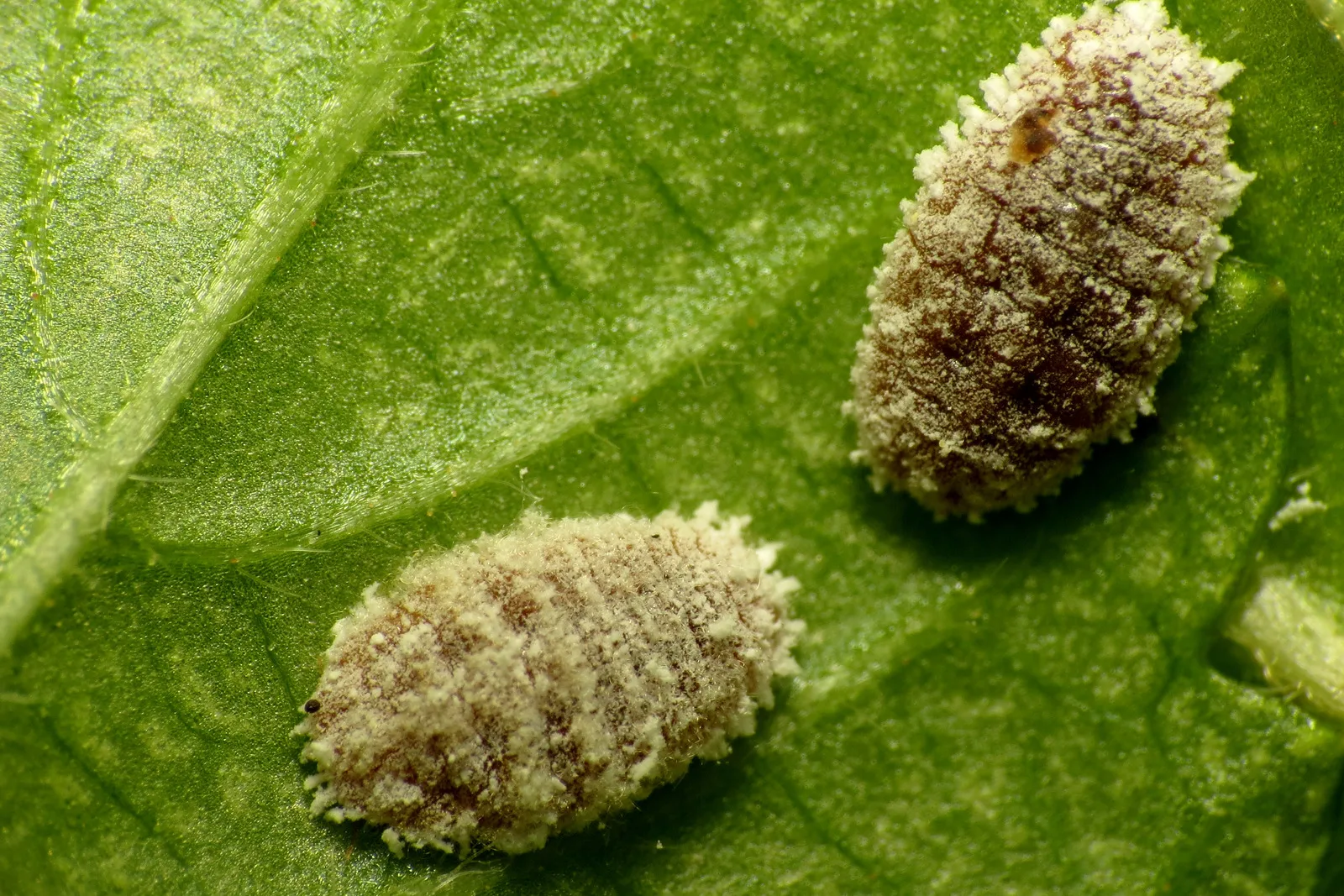
Mealybugs are soft-bodied scale insects covered in a white, waxy, cotton-like coating. They range from about 1/20 to 1/5 inch long. The white fuzz is not the bug itself — it is a protective coating the insect secretes to shield itself from predators and, unfortunately, from many pesticides.
Mealybugs feed by inserting their needle-like mouthparts into plant tissue and sucking out the sap. As they feed, they excrete a sticky substance called honeydew, which can attract ants and promote the growth of sooty mold (a black fungal coating on leaves).
How to Identify Mealybugs
Mealybugs are easy to identify once you know what to look for:
- White, cotton-like clusters in leaf axils (where the leaf meets the stem), along stems, and on the undersides of leaves
- Sticky residue (honeydew) on leaves and surfaces below the plant
- White, powdery coating on individual insects — they look like tiny pieces of lint or cotton
- Egg sacs: Larger white fuzzy masses that contain hundreds of eggs
- Sooty mold: Black, soot-like coating that grows on the honeydew
Where Mealybugs Hide
Mealybugs are masters at hiding. Check these spots carefully:
- Leaf axils (the joint where a leaf meets the stem)
- Undersides of leaves, especially along the midrib
- Inside unfurling new leaves
- Along stems, especially at nodes
- In the crown of the plant where stems emerge from the soil
- On roots (yes, root mealybugs exist and live underground)
- Inside the drainage holes of the pot
Warning
If you see mealybugs on one plant, check every plant nearby immediately. Mealybugs can crawl from pot to pot and even drop onto plants below. Early detection on neighboring plants saves you weeks of treatment.
Plants Most Prone to Mealybugs
Mealybugs can attack virtually any houseplant, but some are particular favorites:
- Succulents — especially Echeveria, Jade Plant, and String of Pearls
- Orchids — mealybugs love to hide in the crevices of orchid stems and roots
- Fiddle Leaf Fig — the large leaf axils provide perfect hiding spots
- Monstera — especially inside unfurling new leaves
- Citrus plants — a classic mealybug target
- African Violets — the fuzzy leaves make detection harder
Treatment Methods
Method 1: Rubbing Alcohol (Isopropyl Alcohol)
This is the go-to for spot treatment and small infestations. Dip a cotton swab in 70% isopropyl alcohol and dab it directly onto each visible mealybug. The alcohol dissolves their waxy coating on contact and kills them. For larger areas, spray a solution of 70% rubbing alcohol directly on the bugs (test on a small area first, as some plants are sensitive).
Repeat every 3-5 days. You will likely find new bugs each time — these are juveniles that were too small to see during the previous treatment, or newly hatched from eggs.
Method 2: Neem Oil Spray
Mix 2 tablespoons of cold-pressed neem oil with 1 gallon of water and a few drops of liquid dish soap (as an emulsifier). Spray the entire plant — tops and undersides of leaves, stems, and soil surface. Neem oil disrupts the mealybug lifecycle by interfering with their feeding, growth, and reproduction.
Apply every 7-10 days for at least 4 weeks. Neem is best used as a follow-up to manual removal with alcohol, not as a standalone treatment for heavy infestations.
Pro Tip
Apply neem oil in the evening or keep the treated plant out of direct sunlight for 24 hours after application. Neem-coated leaves can burn in direct sun. Also, neem has a strong smell — warning noted.
Method 3: Insecticidal Soap
Commercial insecticidal soap sprays work by disrupting the cell membranes of soft-bodied insects like mealybugs. Spray the plant thoroughly, making sure to cover all the hiding spots listed above. Insecticidal soap only works on contact — it has no residual effect — so thorough coverage is essential.
Apply every 5-7 days for at least 3-4 applications. Insecticidal soap is safe for most plants, but test on a leaf first if you have not used it on that species before.
Method 4: Systemic Insecticide
For severe or persistent infestations, a systemic insecticide like Bonide Systemic Granules (containing imidacloprid) is the heavy artillery. You sprinkle the granules on the soil and water them in. The plant absorbs the insecticide through its roots, and any insect that feeds on the plant ingests the chemical.
Systemics are effective because they reach mealybugs hiding in spots you cannot spray — inside tightly curled leaves, deep in the crown, and on the roots. Each application keeps working for several weeks — check the product label for the interval.
Warning
Systemic insecticides should not be used on edible plants (herbs, fruit trees). They are also toxic to bees and other pollinators, so if your plants spend time outdoors, use alternative methods during blooming seasons. Keep treated plants out of reach of pets and children.
The Complete Mealybug Battle Plan
- Quarantine the affected plant immediately — move it to a separate room
- Manual removal — use alcohol-dipped cotton swabs to kill every visible mealybug
- Shower the plant — take it to the sink or shower and blast it with a strong stream of water to dislodge bugs and eggs you might have missed
- Apply neem oil or insecticidal soap — coat every surface thoroughly
- Inspect and retreat every 7 days for at least 4-5 weeks — this is critical because eggs hatch in cycles
- Check all nearby plants weekly during treatment
- For stubborn cases, add systemic granules as a backup
Root Mealybugs
If your plant is declining and you cannot find any mealybugs above ground, check the roots. Root mealybugs live in the soil and feed on roots. They look like white, fuzzy clusters on the root system. To treat:
- Unpot the plant and wash all soil off the roots
- Soak the roots in a solution of insecticidal soap or neem oil for 10-15 minutes
- Repot in completely fresh, sterilized soil and a clean pot
- Apply systemic granules to the new soil as prevention
Prevention
- Quarantine new plants for 2-3 weeks before placing them near your collection
- Inspect regularly — make it a habit to check leaf axils and stems when you water
- Keep plants healthy — well-nourished plants in good light are more resistant to pest damage
- Clean leaves — wiping leaves monthly with a damp cloth removes eggs and early infestations before they establish
- Preventive neem oil — a monthly neem oil spray during the growing season deters mealybugs and other pests
Frequently Asked Questions
How long does it take to get rid of mealybugs completely?
Plan for 4-6 weeks of consistent treatment. Mealybug eggs hatch in waves, and a single missed application can restart the cycle. It is common to give up too early. If you are still seeing new bugs after a treatment, it does not mean the treatment is not working — it means eggs that were present before treatment have hatched. Keep going.
Can mealybugs spread to other plants?
Yes. Mealybugs crawl, and while they are slow, they will migrate to nearby plants, especially when the current host is overcrowded. They can also be carried on your hands or clothing when you handle infested plants. Always quarantine affected plants and wash your hands before touching other plants.
Are mealybugs harmful to humans or pets?
Mealybugs are not harmful to humans or pets. They do not bite, sting, or transmit diseases. The sticky honeydew they produce can be a nuisance on furniture and floors, but it washes off with soap and water. Your concern should be for your plants, not for yourself.
I keep getting mealybugs back. What am I doing wrong?
Recurring infestations usually mean one of three things: you stopped treatment too early (before all egg cycles hatched), you are not checking hiding spots thoroughly enough (especially leaf axils and root zones), or there is a source plant that keeps reinfesting the others. Inspect every plant in your home, isolate any with signs, and commit to a full 5-week treatment cycle before declaring victory.
Sources and further reading
- Mealybugs — UC Statewide IPM Program (University of California)
- Mealybug (glasshouse) — Royal Horticultural Society
- Diagnosing Houseplant Problems Caused by Insect Pests — Iowa State University Extension and Outreach