Overwatering is one of the most common ways houseplants die, and a common reason people overwater is simple: they guess. The soil surface looks dry, so they water — not realizing the root zone two inches down is still soaking wet. A moisture meter for plants takes much of the guesswork out.
Below are five widely available options, from simple analog probes to a soil-sampling tube, and what each one is good for.
How Moisture Meters Work
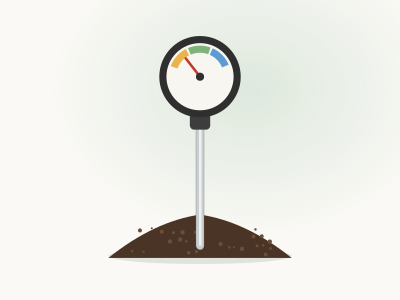
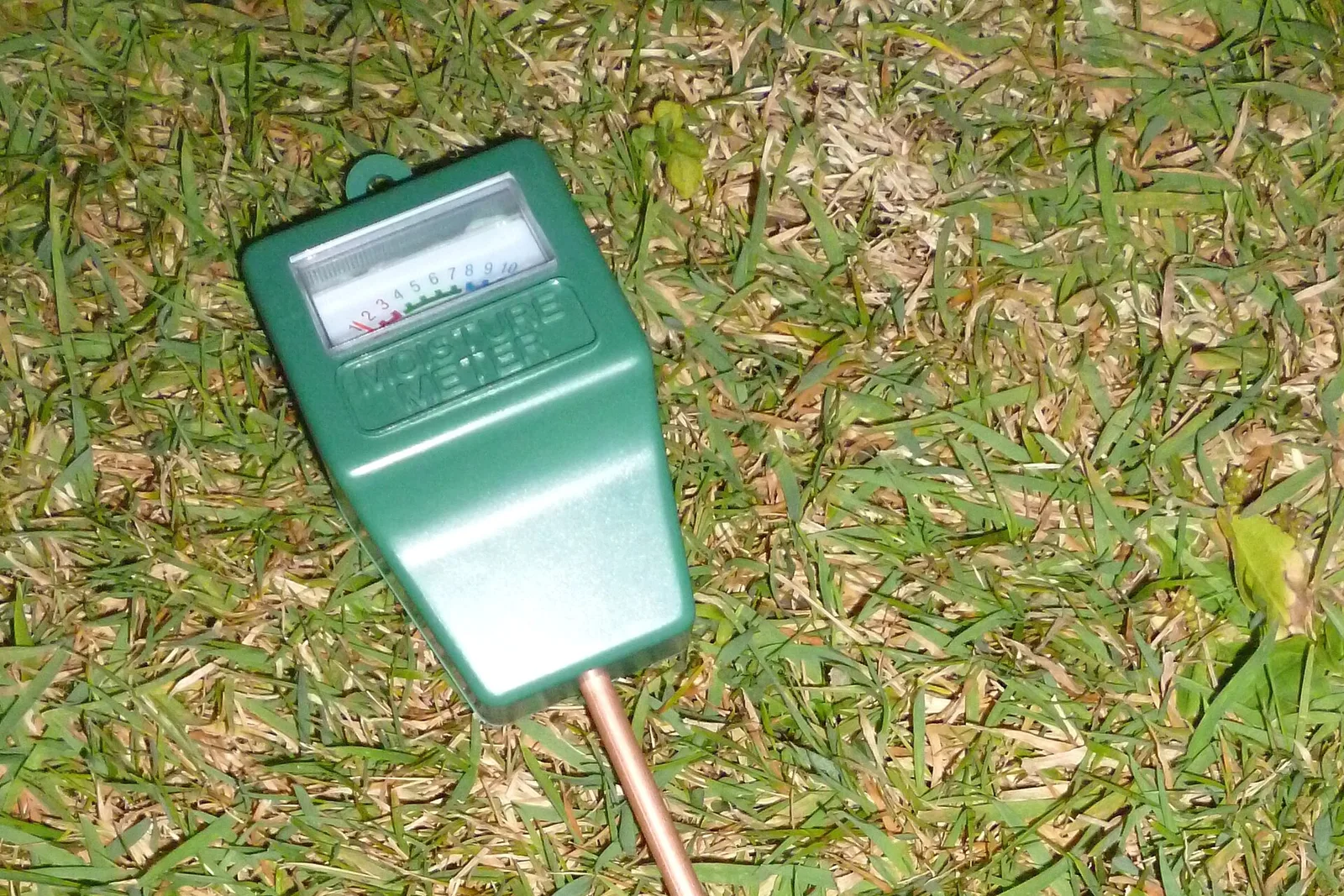
Most analog moisture meters use a simple galvanic cell — two different metals in the probe generate a tiny electrical current when inserted into moist soil. The wetter the soil, the stronger the current, the higher the reading. No batteries required. Digital meters use a sensor and require batteries but can offer more precise readings.
The Sustee works differently — it uses a porous inner core that absorbs water and changes color (blue when moist, white when dry). No electronics at all.
How to Use a Moisture Meter
- Insert the probe into the soil about 2/3 of the way to the bottom of the pot
- Wait 30-60 seconds for the reading to stabilize
- Read the scale (typically 1-10, where 1-3 is dry, 4-7 is moist, 8-10 is wet)
- Water when the reading hits the appropriate level for your specific plant
- Remove the probe after reading — leaving it in permanently corrodes the metal
Warning
Never leave an analog moisture meter in the soil permanently. The probes corrode within weeks if left inserted, destroying accuracy. Insert, read, remove.
1. XLUX T10 Soil Moisture Meter — Best Overall
The XLUX T10 is dead simple: one probe, one dial, no batteries, no setup. Insert it into soil, read the needle, done. The 1-10 scale is easy to interpret.
Why it is good: It gives a quick dry / moist / wet reading at root level. The 7-inch probe is long enough for 6-8 inch pots. No batteries means it works forever (as long as you maintain the probe). It is inexpensive enough to keep one in each room.
Pros:
- No batteries needed — works indefinitely
- Simple, intuitive 1-10 scale
- Accurate enough for practical use
- Extremely affordable
- 7-inch probe reaches deep
Cons:
- Probe tip bends easily in dense or rocky soil
- Not precise enough for scientific use
- Analog dial can be hard to read in low light
- Must remove after each use or it corrodes
2. Sustee Aquameter — Best Design
The Sustee is a Japanese-designed moisture indicator that takes a completely different approach. Instead of a probe and dial, it is a slim stick you leave in the soil permanently. A small window changes color: blue means the soil has adequate moisture, white means it is time to water. That is it. No numbers, no interpretation, no batteries.
Why it is good: The simplicity is brilliant. You glance at your plant and instantly know: blue = fine, white = water. No inserting and removing probes. The porous core needs replacing from time to time (refill cores are sold separately). It is also the most visually attractive option — the slim white stick nearly disappears in the pot.
Pros:
- Leave it in the soil — no daily probe insertion
- Dead simple: blue = moist, white = dry
- Attractive minimal design
- No batteries or electronics
Cons:
- Porous core needs periodic replacement
- More expensive per-plant than the XLUX
- Only tells wet vs dry — no granular reading
- Does not work well in very chunky soil mixes
3. Sonkir MS02 3-in-1 — Best Multi-Function
The Sonkir measures moisture, light level, and soil pH with one device. The dual-probe design provides a slightly more stable reading than single-probe meters. No batteries needed. The light meter on the back is a genuinely useful bonus — hold it near your plant to get a rough idea of light intensity.
Pros:
- Three functions in one device
- Dual probes for more stable readings
- No batteries
- Light meter is surprisingly useful
Cons:
- pH readings are rough estimates at best
- Dual probes are harder to insert in small pots
- Moisture reading is the same simple scale as single-probe meters
4. Dr.Meter S10 — Best Budget Alternative
Very similar to the XLUX in function. Single probe, analog dial, no batteries. The main difference is a slightly different dial face design and a marginally shorter probe. If the XLUX is out of stock, the Dr.Meter is a perfectly fine substitute.
Pros:
- Affordable and functional
- No batteries
- Same simple analog design as the XLUX
Cons:
- Slightly shorter probe than XLUX
- Same corrosion issue if left in soil
- Not meaningfully different from XLUX
5. Soil Sleuth — Best for Accuracy
The Soil Sleuth is not a meter at all — it is a clear plastic tube that lets you pull a core sample from the soil and visually inspect moisture at different depths. Insert it, pull it out, and you can see exactly how wet or dry each layer is. No electronics, no batteries, nothing to break.
Why it is good: It gives you more information than any meter. You can see if the top is dry but the bottom is soaking, which is exactly the condition that causes people to overwater. It also lets you check for compaction, root health, and even pests without unpotting.
Pros:
- You see actual soil conditions instead of a reading
- Shows moisture at different depths
- Doubles as a soil/root inspection tool
- Nothing to break or replace
Cons:
- Leaves a small hole in the soil (fills in over time)
- Takes more effort than a probe meter
- Not practical for very small pots
- Requires interpreting what you see (no number readout)
Which Plants Need a Moisture Meter Most?
| Plant | Why a Meter Helps | Water When Reading Is |
|---|---|---|
| Fiddle Leaf Fig | Extremely sensitive to overwatering | 3-4 (dry to slightly moist) |
| Peace Lily | Dramatic wilter — meter prevents the drama | 3-4 |
| Calathea | Needs consistent moisture, not soggy | 4-5 (never fully dry) |
| Succulents | Must dry completely between waterings | 1-2 (bone dry) |
| Monstera | Large pots retain hidden moisture | 3-4 |
Analog vs Digital Moisture Meters
For home plant care, analog meters (XLUX, Sonkir, Dr.Meter) are usually enough. They need no batteries, work instantly, and are accurate enough for practical use. Digital meters exist but cost more, require batteries, and the additional precision rarely matters for houseplant care. Save the digital meters for greenhouse operations.
Pro Tip
The finger test is still the best free moisture meter. Push your finger 2 inches into the soil. If it feels moist, do not water. If it feels dry, water. A moisture meter is most valuable for large pots where your finger cannot reach deep enough and for plants in spots you might forget about.
Frequently Asked Questions
Do I really need a moisture meter?
If you have killed plants by overwatering and you know it, yes. An inexpensive meter can save a plant. If you have a good feel for watering, the finger test works fine for most plants.
Why does my moisture meter always read wet?
Either the probe is corroded (replace it) or your soil is genuinely staying too wet (improve drainage or water less). Clean the probe with fine sandpaper if readings seem off.
Can I leave the meter in the soil?
Analog meters — no. The probes corrode within weeks. The Sustee Aquameter is specifically designed to stay in the soil permanently.
Do moisture meters work in all soil types?
They work best in standard potting mixes. Very chunky mixes (orchid bark, leca) can give inconsistent readings because the probe may hit air pockets rather than moist substrate. The Soil Sleuth handles chunky mixes better than probe meters.